I will put it exactly as I have been thinking it for the past few days, without filtering it: what is really happening to fine dining in Athens? How can a city experiencing its most outward-looking, energetic and internationally discussed restaurant moment allow its most ambitious and creative establishments to struggle? Why are dining rooms that ought to carry the charged sense that something important is happening here are now left half full, or finding it difficult to fill even at the height of the tourist season? More importantly, why does the international audience, seemingly so ready to embrace Athens through its neo-tavernas, wine bars and contemporary Greek bistros, almost invariably look elsewhere when the conversation turns to the city’s haute cuisine?
How can a city experiencing its most outward-looking, energetic and internationally discussed restaurant moment allow its most ambitious and creative establishments to struggle?
Athens now has more fine-dining restaurants than one might expect for a city of its size and actual spending power. Many are highly accomplished, with serious kitchens and exceptionally talented chefs. Yet this is where the major caveat comes in: for all its quality and considerable potential, the scene seems disconnected from the pulse of the city. It does not generate as much conversation as it could, nor does it inspire the anticipation it ought to. It has yet to become an instinctive point of reference, either for Athenians or for visitors discovering the city through its food. It is as though the scene exists, but has not yet found a way to make itself truly essential.
At the same time, Athens is finally beginning to enter the international conversation as a destination for discerning food lovers, something that would have seemed almost inconceivable only a few years ago. Yet a closer look at most international features, guides, lists and articles on the city’s restaurant scene reveals that its image abroad is almost always built around the same categories of restaurant and, often, the same names: neo-tavernas, contemporary Greek bistros, wine bars and a new generation of meze restaurants.
Many of these establishments are outstanding and thoroughly deserve their place in the spotlight. They have succeeded in distilling something genuine about Athens today. That is not in question. The question is what remains outside this international narrative, and why the city’s haute cuisine appears so rarely as a meaningful part of it. Perhaps it simply is not one. And if that is the case, why?
Part of the answer may lie in the way Athens has learnt to present itself gastronomically. The city shines when it reveals its sociable, outward-looking character, one that charms visitors because they understand it immediately, while Greeks instinctively recognise it as their own. This image carries enormous power because it feels both effortless and unmistakably Athenian.
However difficult this may sound or prove in practice, haute cuisine must find a way to stand alongside this image and make the case for its own relevance. A great fine-dining restaurant in Athens needs to convince visitors that it can offer them something deeply rooted in place while also holding its own on the international stage. Fine dining, more than any other form of restaurant experience, thrives on anticipation. It depends on the thought, ‘I want to go there’, and on that irresistible sense that ‘you simply have to experience it’. It is sustained by the small electric charge of a recommendation passed from one person to another, turning a reservation into an event. When all sense of local identity is missing from that proposition, however, the task becomes far more difficult.
A great fine-dining restaurant in Athens needs to convince visitors that it can offer them something deeply rooted in place while also holding its own on the international stage.
his is where Greek cuisine inevitably enters the conversation, with all its beauty and all its complexity. I do not mean it as the only way forward, as a decorative gesture towards Greekness or as a compulsory return to the past. Great cooking needs freedom. A chef has every right to look towards France, Italy, Japan or Scandinavia, to draw on the techniques that shaped them, as well as on their own obsessions, memories and influences. Even so, in a city such as Athens, one thing feels almost self-evident: a great restaurant should be able to awaken in its guests a memory of place. It should give them a reason to feel that this meal could only happen here, touched by this sea, framed by these mountains and shaped by these olive oils, herbs, fish, lamb, pulses, bitter flavours and sharp acidity, as well as by this ancient relationship with the shared table.
Greek cuisine could become a powerful catalyst for interest in Athens’ fine-dining scene because it carries precisely what many visitors are searching for and eager to taste. Our olive oil-based dishes, fish, lamb, goat, wild greens, yoghurt, honey, trahanas, bread, pies, brine, capers and rock samphire, along with Santorini, Epirus, Crete, the Aegean, Macedonia and the Peloponnese, can all be translated into contemporary haute cuisine in a way that feels entirely of the present. They can be given finesse, precision, restraint and imagination while still preserving that subtle sense of recognition that moves a diner before they have even had time to understand why.
What kind of menu would make diners realise that this city’s haute cuisine can be contemporary, technically accomplished and international, while remaining deeply rooted in its surroundings? Perhaps the answer lies in a more mature reconciliation with Greek flavours.
This is what is often missing from the narrative. Athens has accomplished restaurants, kitchens full of ideas and ambitious chefs capable of carrying their message beyond Greece. Yet, to recapture the attention of diners, travellers, journalists and anyone compiling a list before arriving in the city, its fine-dining scene needs a clearer sense of purpose. It needs to make people ask: what will I experience here that I would struggle to find elsewhere? Which flavour will stay with me? Which memory? What form of hospitality? What sense of the Greek table will I carry with me when I leave? Which meal will reveal something meaningful about Athens today? What kind of menu will make diners understand that this city’s haute cuisine can be contemporary, technically accomplished and international, while remaining deeply rooted in its surroundings? Perhaps the answer lies in a more mature reconciliation with Greek flavours. Athens’ fine-dining scene must approach them as both living ingredients and a deeply embedded cultural instinct. From this could emerge a cuisine that is genuinely Greek and genuinely international. One that moves Greek diners by awakening something of their own, while speaking to international guests by revealing the country through the only language that reaches the body directly: taste.
Athens is home to many talented chefs who periodically engage with Greek cuisine in fine-dining restaurants, often producing dishes that are intriguing, intelligent and technically accomplished. Even so, this relationship frequently feels fragmented, more like a brief encounter with an ingredient or a memory than a deep and sustained exploration of an entire culinary tradition. Perhaps some chefs are still searching for the right approach. Perhaps others feel that Greek cuisine carries too much familiarity to be elevated to the realm of haute cuisine. Perhaps it is intimidating precisely because we all assume we already know it. Yet that is where the real challenge lies.
What does it ultimately mean to develop Greek cuisine? It means taking it seriously. It means seeking out the best rice for gemista, the most intensely flavoured tomatoes, the finest potatoes and meat, exceptional olive oil, the most expressive cheese, the herb that brings genuine intensity and the vinegar capable of transforming the entire structure of a dish. It means studying fava until you understand how it can become silky, concentrated and almost revelatory, as Emmanuel Renaut did after tasting it in Santorini and subsequently creating his Mont Blanc. It means looking beyond the mediocre taverna version of moussaka and asking how its aubergine, minced meat, béchamel, potato, spices, cooking, texture and temperature might be elevated to the level of great cuisine. Could a moussaka or a plate of gemista become a signature dish at a leading restaurant? Absolutely. It simply needs to be approached with the same obsessive pursuit of excellence that would underpin a great French, Italian or Japanese dish.
Creativity naturally has an essential role in all of this. Deconstruction, reconstruction, restraint, eccentricity and unbridled imagination can open up extraordinary possibilities, provided they are grounded in genuine knowledge rather than a superficial idea of tradition. When a chef engages with a dish embedded in the collective memory, they enter difficult territory. Their point of comparison is the food of mothers and grandmothers, villages and summers, Sunday lunches and childhood, tavernas and each diner’s own personal mythology. To take such a dish further, the new version must evoke and transcend at the same time. It must preserve the core while opening up new possibilities, moving those who recognise its roots and exciting those encountering them for the first time. This is the most difficult part, but also the most fertile.
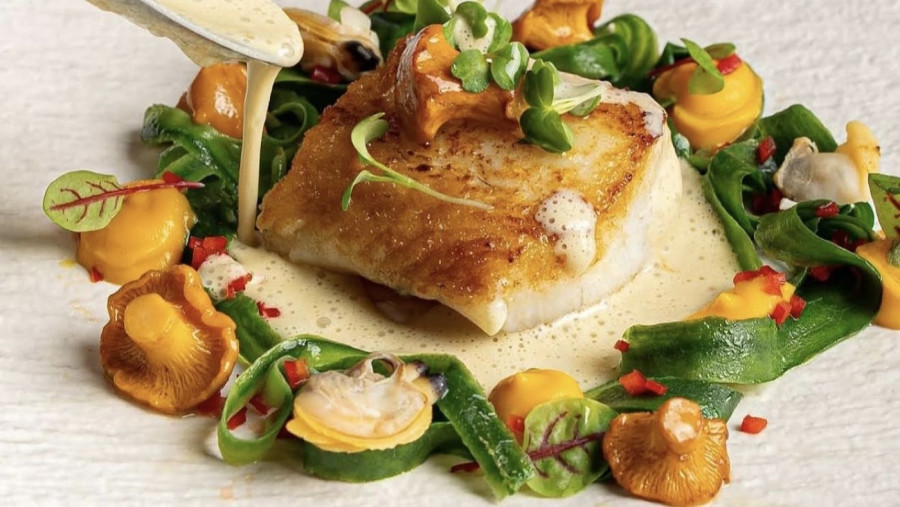
I am not suggesting that every chef should wake up tomorrow and hastily start serving giouvarlakia, dolmades, gemista and anything else that fits neatly into a makeshift idea of Greekness. Nor should tradition once again be subjected to the familiar obsession with deconstruction, with moussaka turned into foam, fava stripped of its purpose and dishes reduced to exercises in spectacle.
I am talking about something far more difficult and far more meaningful: taking a deep dive into the world of Greek flavour. Chefs need to read, travel, speak with producers, seek out ingredients at their source and understand why a dish exists, what need gave rise to it and what economy, era, geography and custom lie behind it. Should they return empty-handed, so be it. At least they will have made the attempt. But if they surface carrying treasures they did not expect to find, and work with them through technique, imagination, persistence and a genuine commitment to flavour, remarkable things can happen.
I am particularly drawn, for example, to the brilliantly conceived reinterpretation of the Greek taverna by multi-award-winning chef Alexandros Tsiotinis at CTC. The dish brings together Santorini fava, olives from Halkidiki, xigalo from Sitia, olives from Kavala and tomatoes from Kalamata. There is an idea here that immediately strikes a chord: a dish that speaks Greek without waving the flag, touching upon something familiar while translating it into a more refined and gastronomically ambitious form. I would genuinely like to see CTC venture even further in this direction.
I feel much the same about Petros Dimas at Makris. It is no coincidence that two of his most compelling dishes are rooted precisely in this relationship with place: The Bouquet from My Father’s Garden, featuring herbs and aromatic plants from his family’s garden in Corinth, and the aged Greek mutton with sweetbread, organic asparagus from Evros and herbs from the farm.
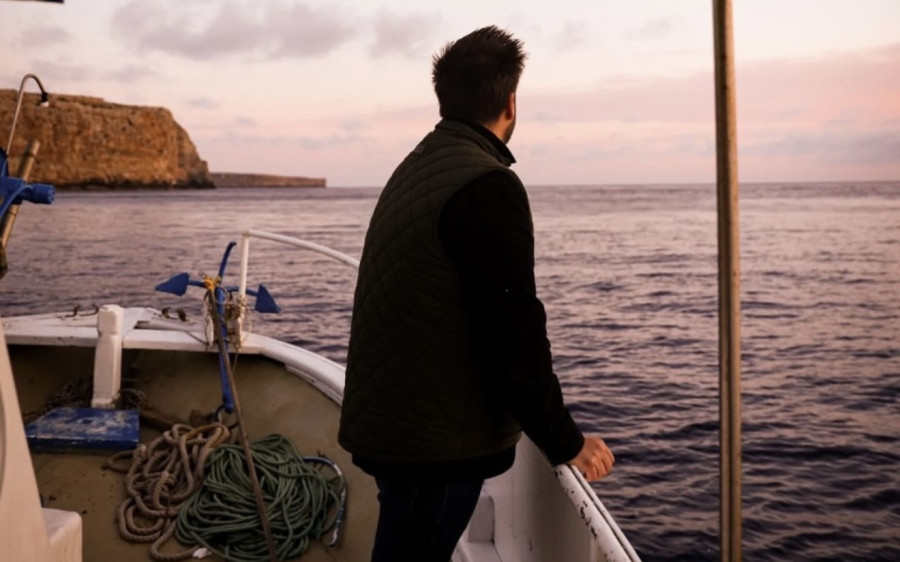
I also think of how unexpectedly compelling Luca Piscazzi’s Pelagos on Tour was over several summer seasons. Its strength lay precisely in the sense of a cuisine travelling through a place and allowing that place, in turn, to become part of it.
I think of Gikas Xenakis at Aleria, who remains firmly committed to Greek cuisine through dishes such as his revithada, demonstrating how much depth a seemingly simple preparation can acquire when handled with great technical skill.
Then there is Nikos Karathanos at Ateno, who seems to grow more accomplished with every passing year. Although Ateno lies outside the strict boundaries of fine dining, he has raised Greek cuisine high, almost as a personal standard, and continues to explore its flavours with extraordinary consistency, dedication and a genuine desire to evolve.
The same applies to Alexandros Charalabopoulos at Sense. Yet what is needed from all of them is greater conviction and decisiveness. Asterios Koustoudis is doing remarkable work with tomatoes at Hotel Grande Bretagne. Could this, ultimately, be the way forward?
Athens’ fine-dining scene has much to gain from remembering that even the most ambitious and creative meal needs to offer some form of comfort. It should feel as though it was created to please someone, to keep them warm, engaged and enchanted throughout the experience.
There is, however, something deeper happening everywhere that cannot be ignored. Today, people are increasingly returning to simple flavours, comfort food and the kind of cocoon that allows them to relax. Athens’ fine-dining scene has much to gain from remembering that even the most ambitious and creative meal needs to offer some form of comfort. It should feel as though it was created to please someone, to keep them warm, engaged and enchanted throughout the experience, rather than constantly asking them to admire the creator’s intention. The issue is also one of communication. Many fine-dining restaurants seem to speak primarily to those who already understand their language. A broader audience, however, needs a compelling story. Diners want to understand why the restaurant exists, to sense the person behind the menu, to recognise the flavour that defines the kitchen and to grasp how the table relates to the city. At a time when everything is communicated, the rarest thing is for something to be communicated truthfully. Athens’ fine-dining restaurants still have much work to do in this respect, as do all of us who write, speak, recommend, travel and help shape the image of the city.
Athens’ fine-dining scene now has a rare opportunity: to approach Greek cuisine with greater confidence, greater freedom and, ultimately, greater tenderness. To allow it to become a point of departure, connecting it with contemporary techniques and the finesse demanded by a truly exceptional meal. When this succeeds, the result speaks both to Greek diners, who recognise something of their own, and to international visitors, who suddenly understand something essential about the place. And if Athens genuinely wants to become a gastronomic destination, its haute cuisine deserves to stand at the very heart of that proposition.