Although the Carmina brand in its current form was founded in 1997, the family’s shoemaking heritage in Inca, Mallorca, dates back to 1866. Inca, long regarded as the heart of Spanish shoemaking, was where the Albaladejo family began crafting made-to-order footwear, establishing a tradition that would span generations.
Over the decades, successive members of the family expanded the business considerably, developing one of Spain’s most significant shoe manufacturing operations. It was José Albaladejo, drawing on this legacy and on extensive experience within the industry, who ultimately chose to return to smaller-scale, high-quality production. With Carmina, he set out to create finely crafted, Goodyear-welted shoes that combined traditional techniques, premium materials and elegant design at a competitive price point. Shortly after the brand’s launch, the first Carmina boutique opened in Madrid.
Today, the house operates boutiques in Paris, Madrid, Barcelona, London, New York, San Francisco and Luxembourg, while also being present in select luxury department stores worldwide. Carmina has established itself as one of Spain’s leading shoemakers, balancing timeless classics such as Oxfords and loafers with more contemporary European styles across a wide and carefully curated range of models.
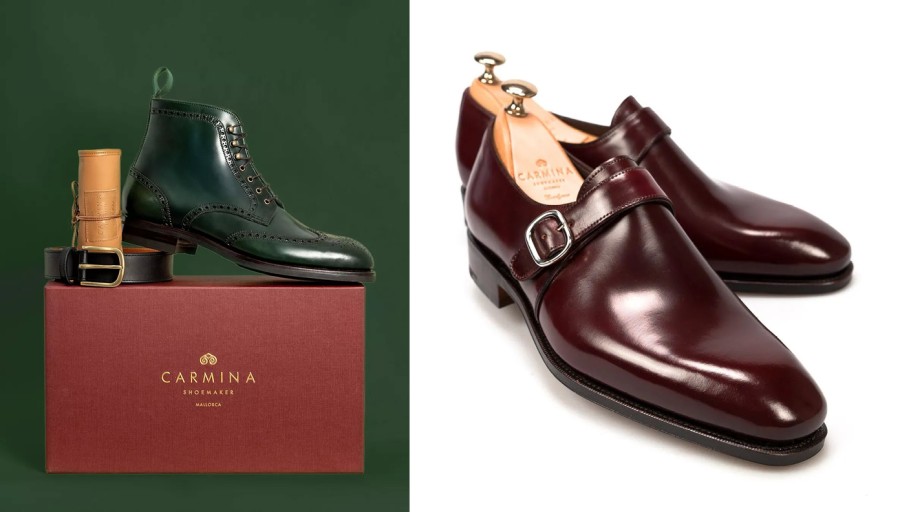
Quality and Construction
Carmina shoes are distinguished by their meticulous attention to detail and the quality of the materials employed. Each pair is crafted using the Goodyear welt construction, a method that ensures exceptional durability, structural stability and the ability to be resoled multiple times over the course of its life.
Rather than attaching the sole directly to the upper, whether by adhesive or direct stitching, the Goodyear method incorporates a welt, a narrow strip of leather stitched to both the upper and the insole rib. The outsole is then stitched to this welt, not to the upper itself. The cavity created between the insole and outsole is filled with natural cork, which gradually moulds to the shape of the wearer’s foot, enhancing comfort over time. With proper care, a well-made Goodyear-welted shoe can last for decades. Carmina sources high-quality leathers from some of the finest tanneries in Italy, France and Spain. The brand’s lasts are particularly admired for their refined proportions and subtly squared toes, reflecting a contemporary European sensibility that distinguishes them from the more rounded, traditionally British aesthetic. Inside, leather insoles and cork reinforcement contribute further to long-term comfort and support. Many models feature closed channel stitching on the sole, a technique in which the stitching is concealed beneath a carefully cut and resealed flap of leather. This not only protects the thread from wear but also results in a cleaner, more elegant finish.
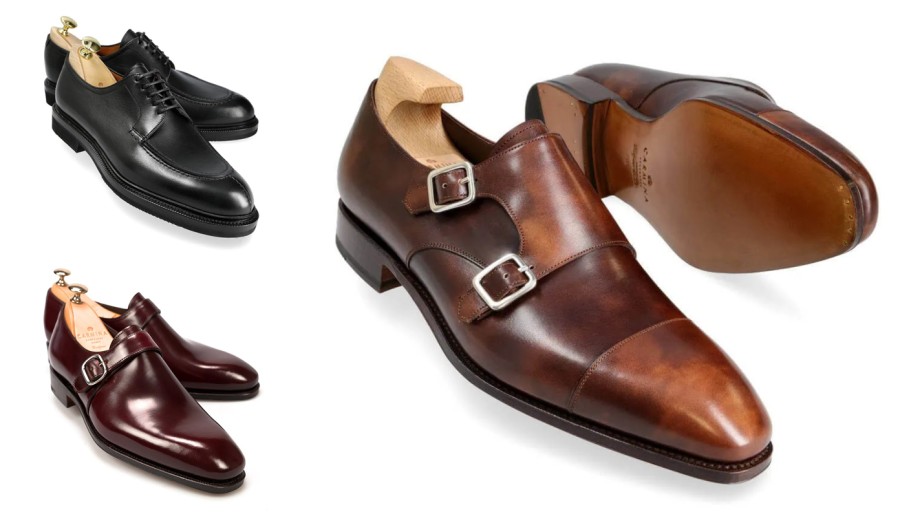
Why Are They Considered Among the Best Worldwide?
A significant reason is, of course, the quality-to-price ratio they offer, as their level of construction comfortably compares with, and at times surpasses, brands in higher price categories. Carmina offers a wide variety of lasts, more than 25 in total, making it easier for clients to find a shape that suits their foot properly. The brand is also known for its use of shell cordovan, one of the most durable and expensive types of leather in shoemaking. Unlike conventional leathers, which come from the outer hide, shell cordovan is derived from a dense fibrous membrane found in the hindquarters of the horse. Carmina is widely regarded as one of the leading specialists in working with this rare and resilient material. Equally important is the fact that production is fully controlled at the company’s factory in Mallorca, ensuring consistently high standards. Still run entirely by the Albaladejo family, and drawing on six generations of expertise, Carmina combines traditional craftsmanship with customisation services, offering both classic and contemporary designs. Although positioned within the luxury segment, Carmina’s prices remain lower than those of several leading European houses. Considering that its construction quality approaches that of bespoke shoes, the difference in value becomes even more apparent.