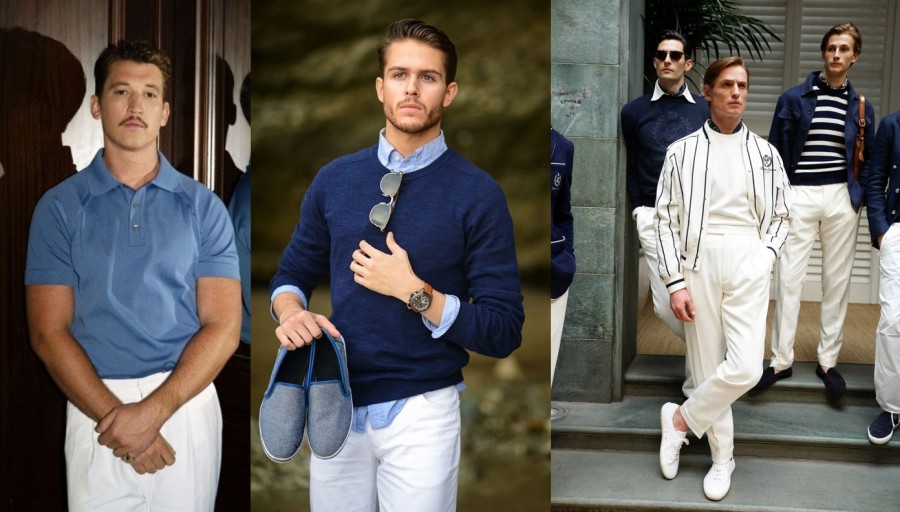
It is important to note that this culture has made a dynamic return to contemporary dressing, incorporating much more modern fashion elements, particularly through the success of the television series Gossip Girl (2007-2012), which focused on the lives of privileged New York adolescents from the Upper East Side. At the same time, it integrated the then-dominant classic style represented by Preppy brands like Brooks Brothers, Burberry, and Ralph Lauren, while also allowing several brands with entirely different characteristics, such as YSL, Gucci, and even Roberto Cavalli, to find their place within this aesthetic.
Do & Don`t There are some representative examples and distinctive features, such as pink polo shirts and shirts. However, these items are often misused, as they fit well on lighter-skinned and tanned men, while being less suitable for those with a dark, sun-drenched tan. A classic example of preppy style is a cotton spring sweater casually draped over the shoulders, in contrast to winter sweaters worn in the same manner. Hoping not to be accused of ageism, I would suggest that men over the age of thirty-five avoid pairing bermuda shorts with a blazer for an afternoon formal look—a combination that is quite popular this year. It`s not strictly prohibited, but typically, it lacks the youthful lightness necessary for such an ensemble. Unless, of course, they find themselves at a beachfront bar on an island, in which case they could easily pair the bermuda shorts with a casual shirt and a v-neck sweater instead of a blazer. Completely inappropriate and often off-putting is the combination of all the above with flip-flops or even tacky sandals. This is something we frequently encounter among Mediterranean cultures, particularly in our country.
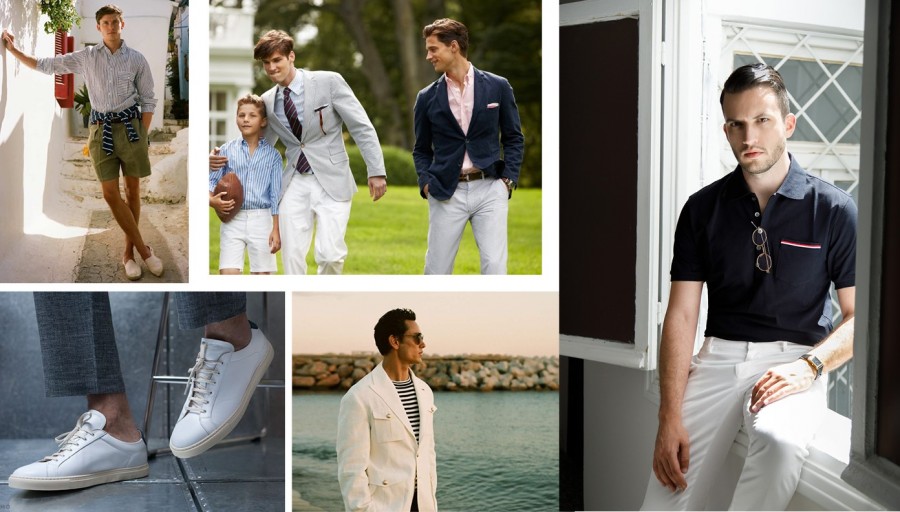
Essentials for the Perfect Preppy Style A chambray shirt and an Oxford button-down are must-haves. Pair them with a set of loafers, which fit perfectly with cotton striped socks, along with a spring blazer, a safari jacket, or even a lightweight suede bomber. Polo shirts now come in dozens of variations, so opt for the classic cuts that aren`t too baggy. White sneakers have remained a staple in men`s fashion for years.
A simple pair of everyday jeans is essential—leave the overly baggy styles for the younger crowd, as they don`t align with the preppy aesthetic. Regular-fit chino trousers in shades of blue, grey, white, and sand are also key items. Cotton v-neck sweaters with thick knits will always represent this style and provide a vintage twist; however, this year’s suggestions lean more towards finer weaves and crew necks.
*Chambray fabric resembles denim but is not the same. It is a much lighter fabric made from dyed white yarn. It is likely that its production began in the 1500s in a community in France called Cambrai (formerly Cambray) and received its name from the fabric Cambric (or Batiste), which is a fine, tightly woven fabric similar to Chambray.