Stavanger lies on Norway’s western coast, where the North Sea meets a landscape of fjords, islands and fishing villages. The city carries a history that stretches back to the Middle Ages and, for much of its past, has been closely tied to the sea and to fishing. The production of canned sardines once brought significant economic prosperity, fostering a strong trading culture. This was later followed by the development of the North Sea oil industry, which ushered in a new wave of growth and transformed Stavanger into one of Norway’s key energy hubs.
Throughout this evolution, the city has maintained a deep connection to nature and to the produce of the sea. Fish, seafood and ingredients sourced from the surrounding region have shaped the local cuisine, laying the foundations for a contemporary gastronomic identity. In recent years, Stavanger has emerged as a destination that attracts travellers, chefs and food professionals from around the world. At the heart of this transformation is RE-NAA, a restaurant that has brought international recognition to the city and played a defining role in the development of its modern dining scene.
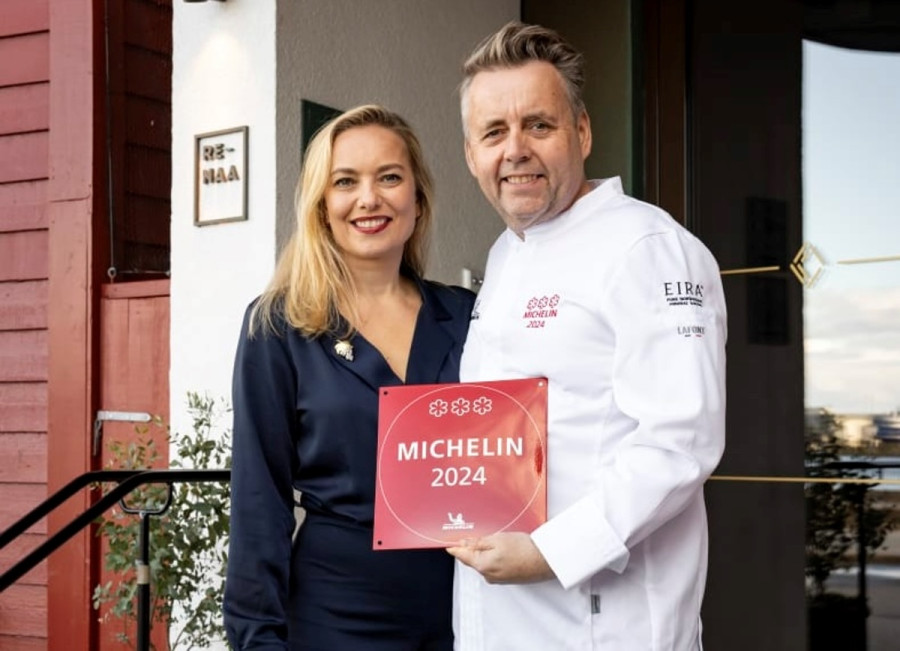
Behind the restaurant are Sven Erik and Torill Renaa, two figures who have helped steer Stavanger in a new direction through years of dedicated work and a conscious decision to root their project in the local landscape while drawing strength from it.
Sven Erik Renaa was born in Trøndelag and, from an early age, developed a close connection to raw ingredients, a relationship that has followed him throughout his career and deepened over time through his experience in different kitchens. He began at the Britannia Hotel in Trondheim, continued in Oslo, and later expanded internationally, with time in New York at David Burke’s Park Avenue Café, followed by a return to Norway to work at ORO alongside Terje Ness.
At the same time, he developed a close association with the Bocuse d’Or, first as a competitor and later as coach of the Norwegian team. Through this experience, he shaped a highly distinctive way of thinking, one that sharpens his technique and allows for a more holistic understanding of raw ingredients.
In Stavanger, this trajectory finds its fullest expression. The region of Rogaland acts as a living map that defines his cuisine. The sea, with its fish and seafood, the fields of Jæren, the producers of Dalane and the landscape of Ryfylke all form the framework within which RE-NAA evolves. The kitchen moves within this ecosystem, guided by strict seasonality and expressing, with clarity, the remarkable flavour of its surroundings.
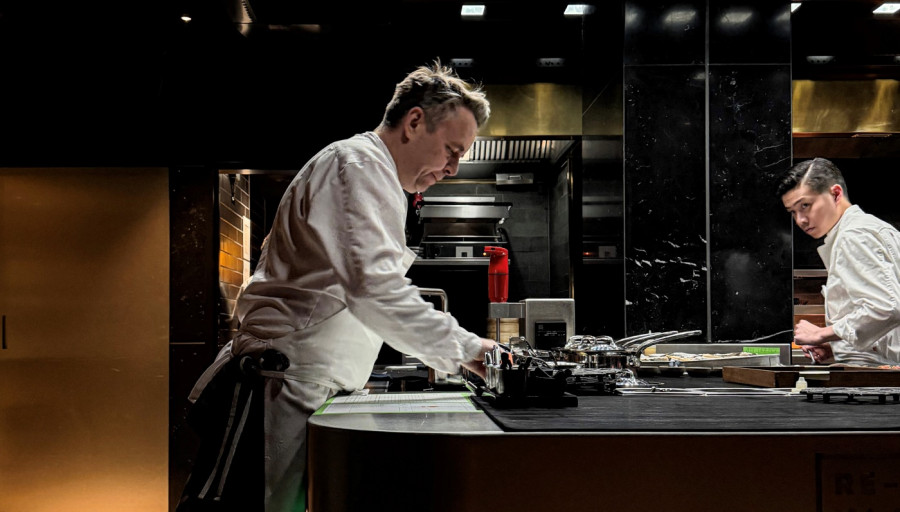
Alongside him, Torill Renaa operates with the same precision, in a different yet equally pivotal role. As the host of RE-NAA, she shapes the entire dining room experience, building one of the most accomplished front-of-house teams I have encountered in a three-Michelin-starred restaurant.
Among them, Kristoffer Aga stands out, a sommelier of remarkable depth, with an instinctive ability to read the table and compose striking pairings in the moment, à la minute. RE-NAA is located within the Eilert Smith Hotel, a charming and quietly elegant boutique property in the centre of Stavanger, and one of the most refined hotel settings I have come across in recent years in association with a three-starred restaurant.
RE-NAA’s journey through the Michelin Guide began in 2016, when it was awarded its first star, becoming the first restaurant outside Oslo in Norway to achieve this distinction, and placing Stavanger firmly on the country’s gastronomic map. A second star followed in 2020, confirming both the consistency and the level of the work already in place. In 2024, it entered the ranks of the three-starred establishments and, based on what I experienced that evening, its place there feels entirely justified.
Let us turn now to some of the most emblematic dishes on the menu. Sea urchin from Tromsø, paired with raw prawn from Lindesnes, finger lime and unripe strawberries, serves as a concentrated introduction to Sven Erik Renaa’s culinary language.
Presented in the urchin shell, set over ice, the urchin itself is dense and almost buttery, while the prawn is sweet, translucent and full of intensity. The dish seems to carry within it the essence of the northern sea. What impresses most, however, is the precision of the technique. Temperature, texture, salinity and the natural sweetness of the shellfish are all perfectly calibrated. Renaa takes two ingredients with strong, distinct identities and brings them into a rare and seamless harmony.
Equally impressive is the shellfish quartet: four distinct preparations, all centred on the sea, yet each exploring a different approach to texture, temperature and intensity. The clam with tomato from Kvernesand and ramson has a clean, almost summery brightness. The Bergen clam moves in a cooler, more mineral direction, where blackcurrant adds depth and a tighter line of acidity without adding weight. The mussel in escabeche marks a turning point within the sequence. The lightly acidic marinade enhances its natural salinity, bringing a delicate intensity that lifts the composition beautifully. Finally, the razor clam with almond, fig leaf oil and caviar introduces a softer yet more complex dimension. The texture becomes silkier, the almond adds gentle sweetness, the fig leaf contributes a green aromatic note, and the caviar delivers salinity and a refined finish.
The scallop from Helgelandskysten is treated with koji, giving it a deeper, almost umami-driven dimension. Alongside it, a butter made from the scallop itself adds richness and length, while an emulsion of fermented barley with fennel introduces a gentle earthiness and a subtle aromatic freshness that keeps the dish in balance.
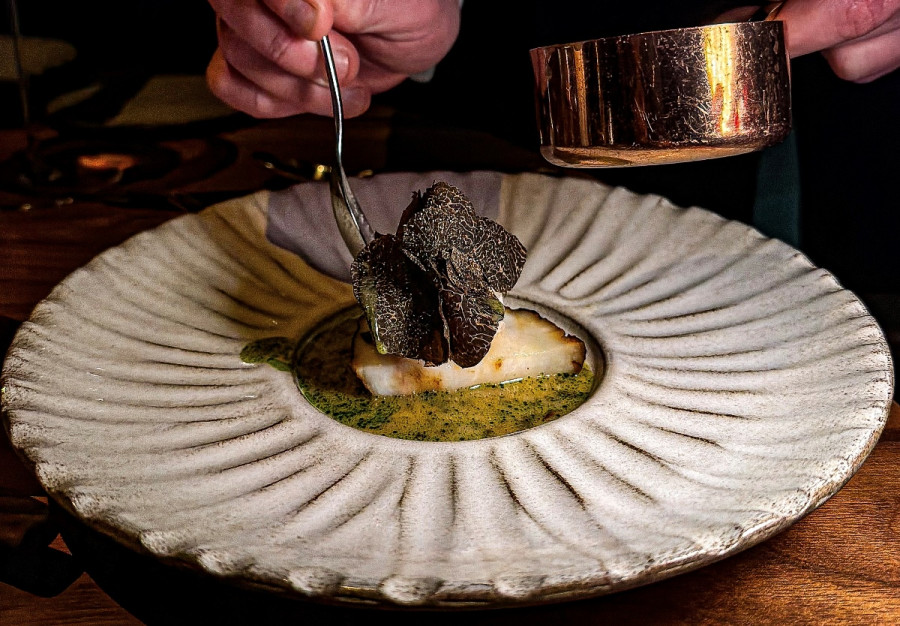
The monkfish from Sirevåg arrives perfectly cooked, juicy, with a pleasing bite and that full, rounded flavour the fish develops when handled with care. The butter adds a more grounded, rounded character to the dish. I enjoyed it very much.
To close the savoury courses, reindeer from Røros is served. Deeper and more wintery in tone, it is complemented by berries that bring freshness and a bright acidity, while sweet koji softens the overall profile.
Desserts maintain the same high level as the rest of the menu, and what sets them apart is that they feel unmistakably like desserts. They offer clarity of flavour, balance and a certain immediacy that makes them enjoyable through to the end, something not always found in Nordic fine dining, where eccentricity and concept can sometimes take precedence over pure pleasure.
RE-NAA is a remarkable restaurant, but also something more than that. It stands as proof that great cuisine does not need to invent a world of its own to achieve significance. It simply needs to look deeply, and with absolute honesty, at the place from which it comes. That, perhaps, is its greatest achievement. It has not merely brought three Michelin stars to Stavanger; it has given a voice to an entire region, allowing it to be heard clearly, confidently and far beyond the borders of Norway.
Info: Nordbøgata 8, 4006 Stavanger, Norwayhttps://www.restaurantrenaa.no/