For decades, seafood dining in Athens was associated with a very specific image, one that feels almost universally familiar. The classic psarotaverna, with its own rituals and its own shortcomings; the display of impressive whole fish laid out on ice, alongside humbler, irresistible small fish destined for the pan. The dishes spoke a direct, deeply Greek and instinctively recognisable language. At its best, in the right hands, this kind of dining could offer genuine pleasure and express the full generosity of Greece’s seafood cookery. There has always been a core of devoted diners who understood, sought out and celebrated this experience, precisely because the table has long operated on multiple levels, offering a range of distinct virtues. It could accommodate the simple joy of a large fish expertly grilled, while just as easily delivering the quiet thrill of perfectly fried whitebait, anchovies or red mullet, a few shellfish, or a shared plate of seafood at the centre of the table. And yet, for all its richness, seafood was slow to claim the place it deserved within the fabric of modern urban life. It took time for it to evolve into a choice that could stand on equal footing with the city’s emerging gastronomic identity, one that reflects changing dining habits and responds to an increasingly discerning demand for quality, character and technical precision.
Over time, however, Athens changed. The way people dine out evolved, our expectations shifted, and so too did our familiarity with quality produce and the finer nuances of flavour. Diners became more informed, travelled more widely, tasted more, and learned to recognise the difference between something merely adequate and something truly exceptional. Within this new landscape, seafood found the ground it needed to reintroduce itself as a vibrant, contemporary expression of Athenian taste. It was about time, after all.
A decisive role was also played by the way we began to speak, again and again, about the product itself. The conversation around the fish market, seasonality, provenance, fishing ethics, the proper handling of raw ingredients and the craft of grilling or ageing acquired greater depth, and with it greater visibility. The Athenian diner began to hear names such as red porgy, dentex, lagoon prawns, red mullet, grouper, pandora and scorpionfish differently. They started to associate them with specific people, particular fishing boats, distinct seasons and a more conscious approach to consumption. At the same time, a new generation of restaurants and chefs gave seafood a new language. Some honoured the old Athenian school with greater precision, better sourcing and a more considered, contemporary perspective. Others brought a distinctly modern sensibility to the fore, with cleaner lines, closer attention to the details of grilling and presentation, and an approach that saw fish not simply as a premium ingredient to be placed over charcoal or in the pan, but as a field for creativity. In this way, seafood dining acquired a breadth it had previously lacked. It proved capable of encompassing the taverna, the more playful seafood bar-restaurant, the contemporary urban dining room and even a more refined fine dining expression. Through all this, it has regained a sense of pleasure and extroversion. A raw dish of the day, impeccably fried small fish, a deeply flavoured, carefully made kakavia, a large fish grilled over charcoal, or a seafood dish defined by clarity and technical precision can now stand at the centre of a modern dining experience, engaging a far broader audience.
Behind this evolution, of course, stand the restaurants, chefs, fishmongers and hosts who understood early on that seafood could express something far greater than its traditional role. It could articulate a new Athenian sensibility, a more mature relationship with flavour, with raw materials, with seasonality, and with the sea that surrounds the city and gives it one of its most defining gastronomic signatures. Some acted as pioneers, others as renewers, and others still as exponents of a more contemporary culinary language. Each of them, in their own way, contributed decisively to establishing seafood dining in Athens as a category of both substance and momentum.
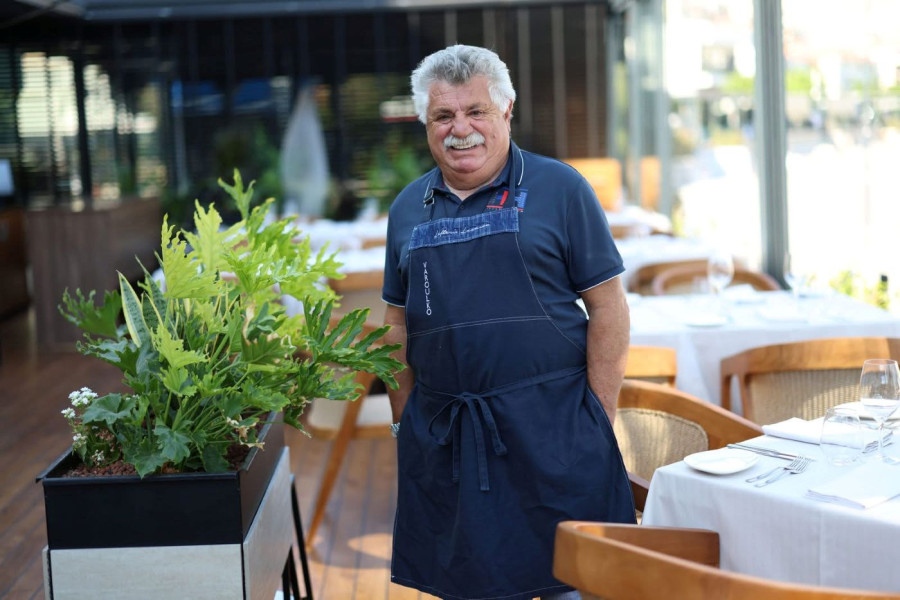
The enduring Varoulko of Lefteris Lazarou stands at the beginning of this remarkable journey. Forty years after its founding, it remains a landmark restaurant in Greek gastronomy and, unquestionably, the point from which the meaningful elevation of seafood dining in Athens began. Lefteris Lazarou was the one who repositioned fish and seafood within the city’s restaurant landscape, moving them beyond the logic of the simple taverna into a realm of higher gastronomic expression, without ever losing touch with Greek flavour or the deep-rooted memory of the sea. Varoulko broke new ground, shaped culinary thinking and demonstrated that Greek seafood cuisine could stand confidently at the most demanding level.
Kostas Spiliadis and Milos belong to another, equally significant dimension of this story. Milos became an international point of reference for Greek seafood, playing a decisive role in giving Greek fish global visibility, cosmopolitan prestige and an almost iconic identity. Its influence on Athens runs deeper than it might first appear. Through Milos, the idea was established with remarkable clarity that exceptional fish, when grounded in outstanding raw materials, restrained execution and an uncompromising commitment to quality, can become an experience of truly international standing. Spiliadis endowed Greek seafood with the sheen of a global brand, without ever losing sight of the intrinsic value of the product. This contribution was also recognised at the FNL Best Restaurant Awards, where he was honoured for his overall contribution to gastronomy.
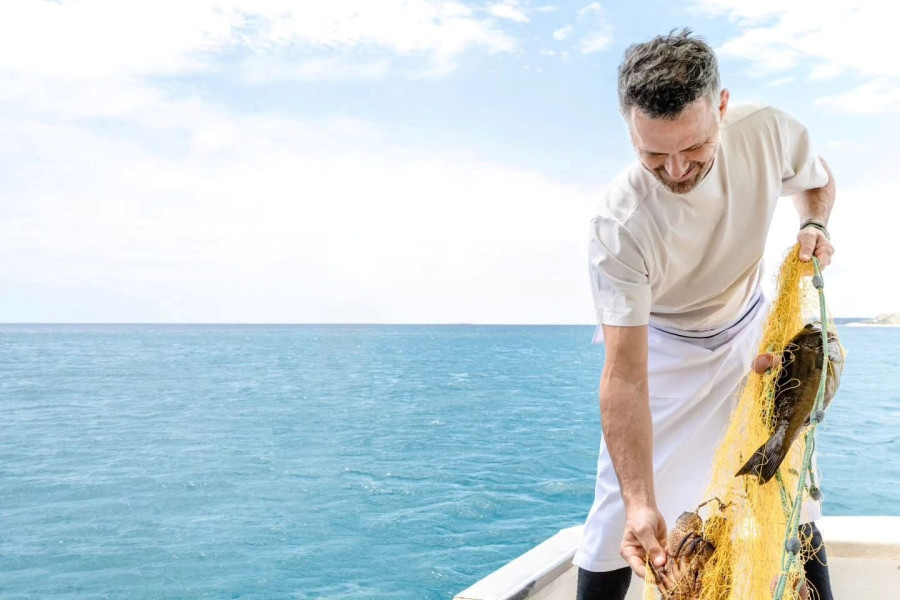
Giorgos Papaioannou has been one of the most defining figures in reconnecting Athenians with the idea of authentic seafood dining. Through his eponymous restaurants in Vouliagmeni, Piraeus and Kifissia, as well as his more accessible Barbounakia establishments, he shaped an entire school of thought centred on the purity of raw materials, a deep knowledge of fish and the art of simplicity when executed with precision. Following a trajectory that has left a strong imprint on contemporary Greek gastronomy, Georgianna Hiliadaki turned her attention to fish and seafood with Iodio (featured in the article’s lead image), approaching them through a lens that is freer and more current, with greater boldness in flavour and composition, while the backbone of the restaurant remains comfort-driven.
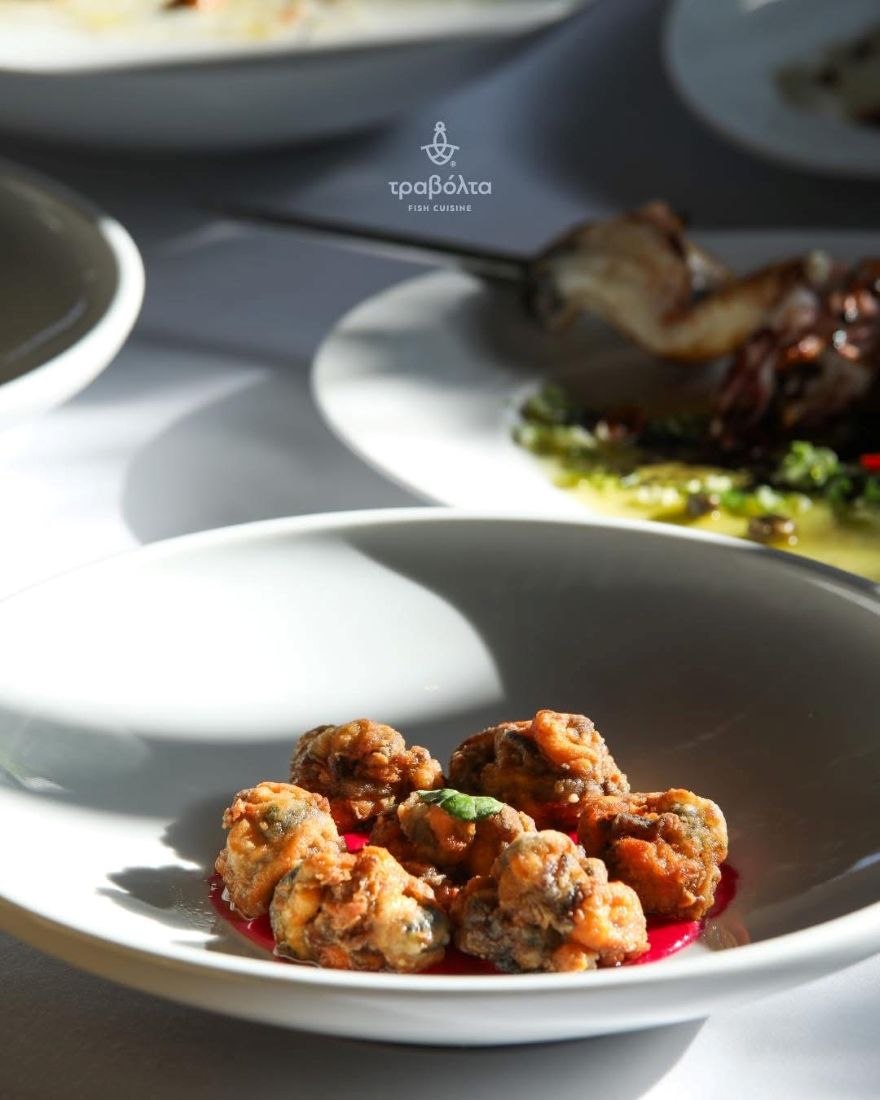
Spyros and Vangelis Liakos, who grew up in Chalkida, carry with them a deep, lived relationship with the sea, one that has shaped their culinary instinct in a profoundly meaningful way. At Travolta, together with Anestis Lazaj, they transformed this experience into a new and distinctly personal language for fish and seafood. Drawing on their own memories, they gave seafood dining a signature style and offered the city dishes that are original, recognisable and deeply loved by their audience. Their contribution has been pivotal, demonstrating that fish in Athens could take on new energy, a new identity and a popular, contemporary charm that speaks directly to the public.
Let us return now to Piraeus and to the iconic Dourambeis, the oldest seafood restaurant in Athens. Far more than a historic name, it has been a place where generations of Athenians were initiated into the value of excellent raw materials and the pleasure of proper execution. Its contribution to this broader journey carries particular weight, as it preserved an entire tradition while acting as a bridge between the city’s older, authentic seafood culture and its present-day revival.
On the contemporary map of Athenian seafood dining, Akti in Vouliagmeni and Piscis in Mikrolimano are linked by a common thread: the multi-award-winning chef Panagiotis Giakalis. Two restaurants with distinct identities, yet both consistently expressing two essential facets of today’s seafood dining scene in Athens. Akti, set in one of the city’s most idyllic locations, articulates a refined, contemporary approach to seafood, with a distinctly cosmopolitan air. Piscis, by contrast, in Mikrolimano, operates through a more direct and accessible model, while maintaining equally high standards of quality.
One of the most compelling aspects of this revival is the growing appreciation, in recent years, for cooked fish and for a style of seafood cuisine that offers greater warmth, depth and a sense of memory. At times, it also embraces a more experimental spirit, drawing on the logic of the modern gastrotaverna while remaining grounded in classic forms that have rightfully stood the test of time. Alongside the more expected or emblematic names, a number of noteworthy restaurants have enriched the scene. These include Mikres Kyklades in Ilioupoli, Balcony in Cyclades in Kareas, the open-hearted and sui generis Psariston by Vasilis Akrivos, Argoura by Nikos Michail, Psarou in Glyfada, now with Christos Lapas as consulting chef, and Polpo in the Renti Market, led by Nikos Katsikaris. At the same time, long-standing favourites such as Kanaria in Moschato and Anna’s Psarokokkalo in Keratsini continue to hold their place, alongside more playful venues like Sea Satin in the southern suburbs, which keeps raising the pace in its kitchen.
Yet when the conversation turns to cooked dishes within the contemporary urban seafood scene, the ever-impressive Cookoovaya simply cannot be overlooked. Much of this is due to its chef-owner, Periklis Koskinas, a cook who carries within him the memory and the truth of a cuisine in which fish finds one of its most expressive forms in the pot. His outstanding bianco at Cookoovaya has functioned almost as a landmark dish within this context. From that point on, it began to appear, in one form or another, across numerous restaurants, inspiring a new generation of chefs to return more confidently, and without inhibition, to tradition.