



Massimo Bottura’s presence at last year’s inaugural Gastrosophy Fest had already set expectations remarkably high for what might follow. The great Italian chef, joined by a distinguished group of guests including Jeremy Chan of Ikoyi, Kristian Baumann of Koan and René Frank of CODA, gave the first edition an international stature that I believe was particularly significant for Greek gastronomy.
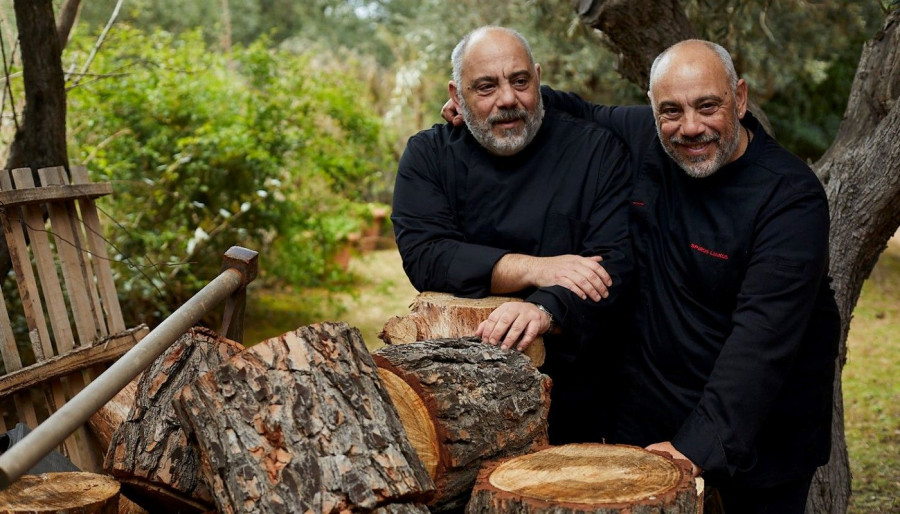
A year later, Spyros and Vaggelis Liakos, together with ANT1, returned with the second edition of Gastrosophy Fest on Sunday, 4 October, at the Faliro Sports Pavilion Arena, raising the bar even higher.
It is an initiative of real importance. In recent years, Athens has developed a far more active and outward-looking restaurant scene, driven by notable chefs, new investment and a generation of professionals and food lovers who follow international developments closely.
A major annual gathering such as Gastrosophy can add another important chapter to that evolution by bringing together, in the same setting, figures from very different culinary backgrounds, producers, entrepreneurs, journalists and, of course, the public. Discussing contemporary gastronomy in Athens carries a very different weight when the conversation includes the people who are genuinely shaping it through their work.
A Global Line-Up of Highly Influential Figures
One of the biggest names at this year’s edition was Ana Roš, one of the most influential women in contemporary global gastronomy, whose path to the top has been anything but conventional. Entirely self-taught, and initially considering careers in sport and diplomacy, she ultimately chose cooking and went on to transform Hiša Franko, in the remote Slovenian town of Kobarid, into one of the world’s most sought-after gastronomic destinations, earning three Michelin stars along the way. Her cuisine is deeply connected to the Soča Valley, its people, its biodiversity and the produce she finds around her. In 2017, she was named The World’s Best Female Chef by The World’s 50 Best Restaurants, while her international recognition has played a decisive role in bringing Slovenian gastronomy to global attention.
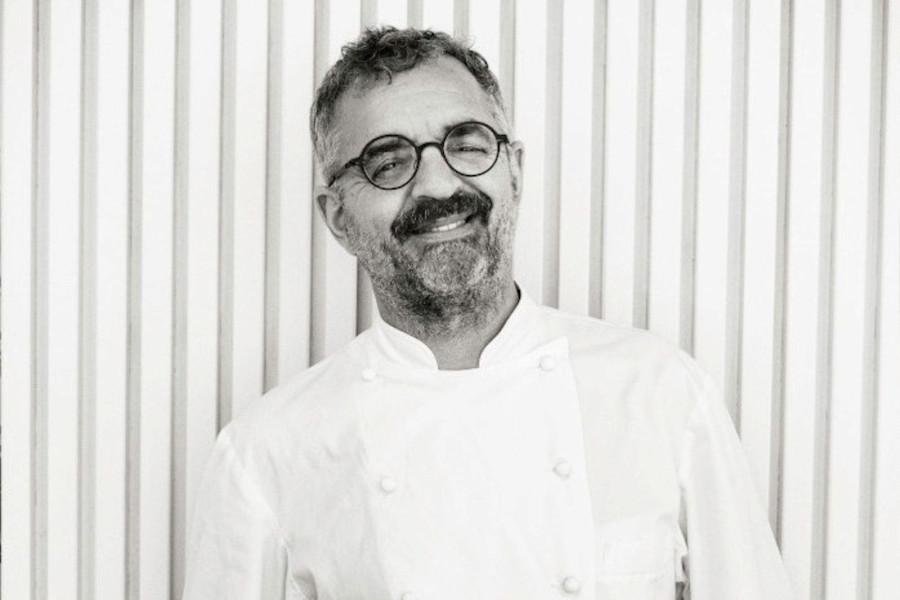
Equally significant was the participation of Mauro Uliassi, a chef who commands enormous respect in the world of haute cuisine. Since 1990, when he opened a small restaurant on the beach in Senigallia with his sister Catia, Uliassi has evolved into one of Italy’s great three-Michelin-starred restaurants. Over the years, he has developed a highly personal cuisine in which the traditions of the Adriatic meet research, experimentation and remarkable culinary precision. The celebrated Lab menu, continuously renewed through the work and research of his team, is perhaps the clearest expression of that restless creative spirit. His meeting in Athens with Lefteris Lazarou, centred on the sea and the future of fishing, added another particularly relevant dimension to the programme.
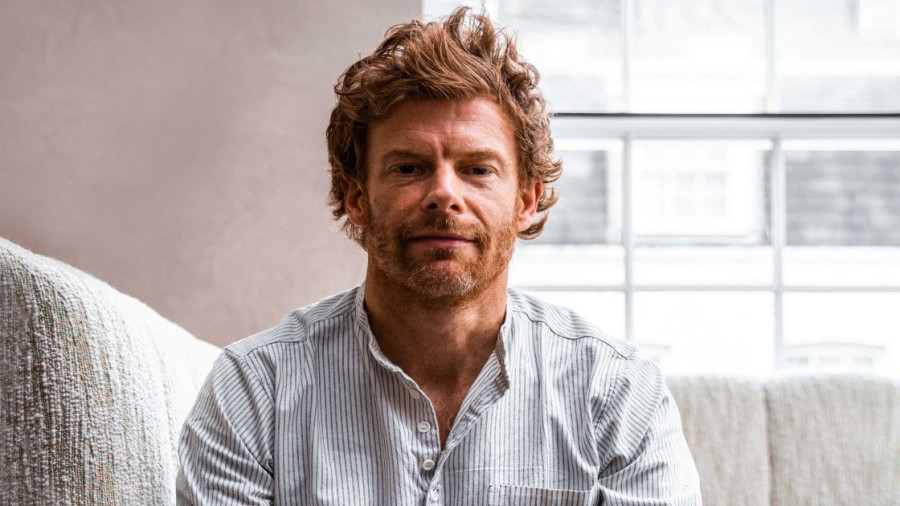
Tom Aikens also came to Athens, bringing with him the experience of one of the most recognisable names in British haute cuisine. At just 26, he became the youngest British chef to win two Michelin stars. Having trained under major figures such as Pierre Koffmann and Joël Robuchon, he represents a school of cooking shaped by strong French influences and exacting technique. Today, through the Michelin-starred Muse in London’s Belgravia, he presents a more personal side of his cooking, drawing inspiration from childhood memories and significant moments in his life.
Also arriving from London was Rafael Cagali, the Brazilian chef of Italian heritage behind the exceptional two-Michelin-starred Da Terra in Bethnal Green. His professional journey includes time with Martín Berasategui, Quique Dacosta, Heston Blumenthal at The Fat Duck and Simon Rogan. In his own cooking, that formidable technical background meets the flavours of Brazil and memories of his family heritage, resulting in a cuisine that has earned a distinctive place on the London dining scene.
Another particularly interesting presence was Merlin Labron-Johnson, who had already earned a Michelin star at the age of 24 with Portland in London before leaving the capital`s intensity behind and settling in Somerset. There, he created Osip, a small gastronomic gem in Bruton where seasonality and a direct relationship with the land shape almost the entire menu. Together with his team, he grows a significant proportion of the fruit and vegetables used in the kitchen. His approach offers a compelling example of how fine dining can evolve through a closer relationship with agriculture.
The international line-up was completed with Joe Otway, co-creator of Higher Ground and Flawd in Manchester. He represents a different and particularly relevant approach to hospitality, with a strong emphasis on flavour, seasonality and sustainable production. Through Cinderwood Market Garden in Cheshire, which he co-founded, he supplies Higher Ground with fresh produce, creating a very direct connection between field and kitchen. The restaurant has been awarded a Michelin Bib Gourmand and is a strong example of the new wave of British bistronomy.
On the Greek side, this year’s Gastrosophy also brought together a strong line-up of leading chefs, including Lefteris Lazarou, Christoforos Peskias, Nikos Karathanos, Panagiotis Giakalis, Petros Dimas, Gikas Xenakis, Asterios Koustoudis, Pavlos Kyriakis, Alexandros Tsiotinis, Manolis Papoutsakis, Nikos Thomas and Petros Syrigos.
The Value of Nourishment at the Heart of a Wider Conversation
The festival’s second major pillar was the Gastrosophy Forum, which this year centred on the theme The Value of Nourishment and Its Journey. The choice of speakers itself reflected the direction of the event: to examine food as a vital part of everyday life, with implications extending into the economy, culture, the environment, health and tourism. The value of nourishment has, after all, been at the heart of Gastrosophy from the outset and remains central to its philosophy. It is an idea that reaches far beyond the nutritional value of a dish, touching on health, quality of life, culture, environmental protection and our relationship with food itself.
From the soil and the sea to the labour of the producer, the hands of the cook and, ultimately, our own table, nourishment forms an entire chain that deserves to be understood, respected and cared for. And I find it particularly meaningful that Gastrosophy continues to insist on this perspective, reminding us that behind everything that gives us pleasure in food lies something far more fundamental: life itself, and the quality of that life.
The programme was structured around eight thematic sections. Mauro Uliassi joined Lefteris Lazarou, Panagiotis Giakalis and Gikas Xenakis for a discussion on the challenges facing the sea today, from overfishing and seasonality to the need to protect marine ecosystems.
Ana Roš had a standalone session devoted to the relationship between ingredients and a place`s identity, exploring a subject she understands perhaps better than almost any chef in the world through her own experience in Slovenia.
There were also compelling discussions on the role of gastronomy in shaping a destination, the social responsibility of chefs and the future of food. Participants included Rafael Cagali, Joe Otway and Merlin Labron-Johnson, while Master of Wine Yiannis Karakasis addressed another highly relevant subject: the relationship between wine and younger generations, and how drinking habits are changing.
Criticism, Major Institutions and Their Influence on Gastronomy
Particularly compelling was the discussion around the role of gastronomic criticism and the influence that major international institutions can have in shaping a culinary destination. Among those taking part in the panel were Panos Deligiannis, founder and director of FNL, and Alexandra Michot, one of the experienced voices of French food journalism and France Academy Chair for The World’s 50 Best Restaurants.
At a time when a Michelin star or a high position in an international ranking can dramatically alter the course of a restaurant, questions around the responsibility of criticism, the credibility of major institutions and their real impact on gastronomy feel more relevant than ever. After all, these are two people who know this world extremely well and have observed its evolution at close range for decades.
For me, this is where one of Gastrosophy’s greatest strengths becomes most apparent. Bringing leading international voices to Athens matters even more when their presence opens the door to substantive exchange with professionals from across the Greek hospitality industry.
A young chef, a small-scale producer or a restaurateur has the opportunity to hear first-hand from people who have already tested different models, developed their own philosophies and accumulated experience that can be genuinely useful to others. That exchange of knowledge is one of the most valuable outcomes of an event like this.
From the Forum to a Major Food & Wine Party
The day continued with the Food & Wine Party, where gastronomy moved from discussion to pure enjoyment. More than twenty live-cooking stations served signature dishes from the teams behind Basegrill, Travolta, Ateno, Hoocut and MetaMeat, with ingredients from Thessaly, Macedonia and Crete playing a central role.
A selection of wines from the Greek vineyard, beer pairings, music and a programme that carried on into the evening completed the celebration, which brought together hospitality professionals, food lovers and those keen to meet the people behind some of today’s most significant restaurants.
A single ticket included access to both the Forum and the tastings at the Food & Wine Party.
INFO
Gastrosophy Fest powered by Protergia
Sunday, 4 October 2026, from 1.00pm
Faliro Sports Pavilion Arena (Tae Kwon Do)
Programme and information: gastrosophy.gr

Login or register to join the conversation