



In 1977, Ayla Emiroğlu arrived in Bodrum and encountered a peninsula still untouched by the fame that would later define it. The Turkish Riviera bore little resemblance to the destination it is today, while Bodrum retained the charm of a place whose beauty was still woven into everyday life: a scattering of houses, very few cars, cats in the streets, fishing boats, the scent of jasmine and a sea that belonged first and foremost to those who lived beside it.
Ayla opened a small guesthouse with just 16 rooms. In reality, she created an intimate, unvarnished kingdom of tables, gardens, rituals, care and traditional flavours, presided over by a hostess unlike any other.
As I listened to the story, I found myself thinking that this is how enduring destinations are born. From one person, one gesture and one kitchen capable of holding an entire family within it.
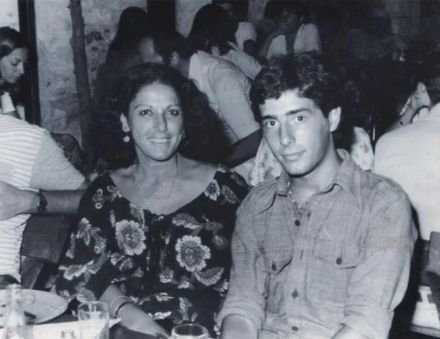
She was known affectionately, and with a certain reverence, as Maçakızı, the Queen of Spades. The nickname passed from the woman to the place, eventually becoming the name of a legend.
Ayla Emiroğlu possessed the rare gift of a truly exceptional host. She made people feel that they had arrived somewhere handmade and deeply personal, a place created almost entirely for them. She served simple Turkish food to guests who could have had almost anything, yet they returned time and again precisely for that simplicity and warmth. There was something profoundly moving about it, because it was rooted in all those small, intangible things that make a family feel like a family.
A community gradually formed around this almost novelistic figure: Istanbulites, artists, bohemian characters, society figures, instinctive travellers, friends of friends and people arriving in Bodrum for the first time, only to leave feeling that they had discovered a private paradise of their own. Ayla was everywhere and left nothing to chance. She was said to speak to the wildflowers in her garden, to restore order to a room with a single glance and to work with the same people for years, earning their enduring loyalty. These details matter. They reveal a woman who understood hospitality as a living organism.
Her words, ‘Bodrum was my freedom’, still inscribed on a wall of the restaurant that bears her name, illuminate the entire story. Bodrum gave her the space in which to flourish, and she created a world on her own terms, with the discipline and tenderness of someone who knew exactly what she wanted.
The original Maçakızı was Ayla herself.
Ayla’s son, Sahir Erozan, inherited a formidable legacy. In the same year that she began writing the first chapter of Maçakızı in Bodrum, he left for the United States. He spent many years immersed in Washington, D.C.’s restaurant and nightlife scene, from Café Med in Georgetown to Cities in Adams Morgan, a restaurant that regularly transformed its culinary and visual identity, transporting guests from one city to another. When he returned to Bodrum, that experience met the memory of his mother and ushered Maçakızı into its second era. It was a form of rebirth, but the kind that occurs when a place grows while preserving the pulse that first brought it to life.
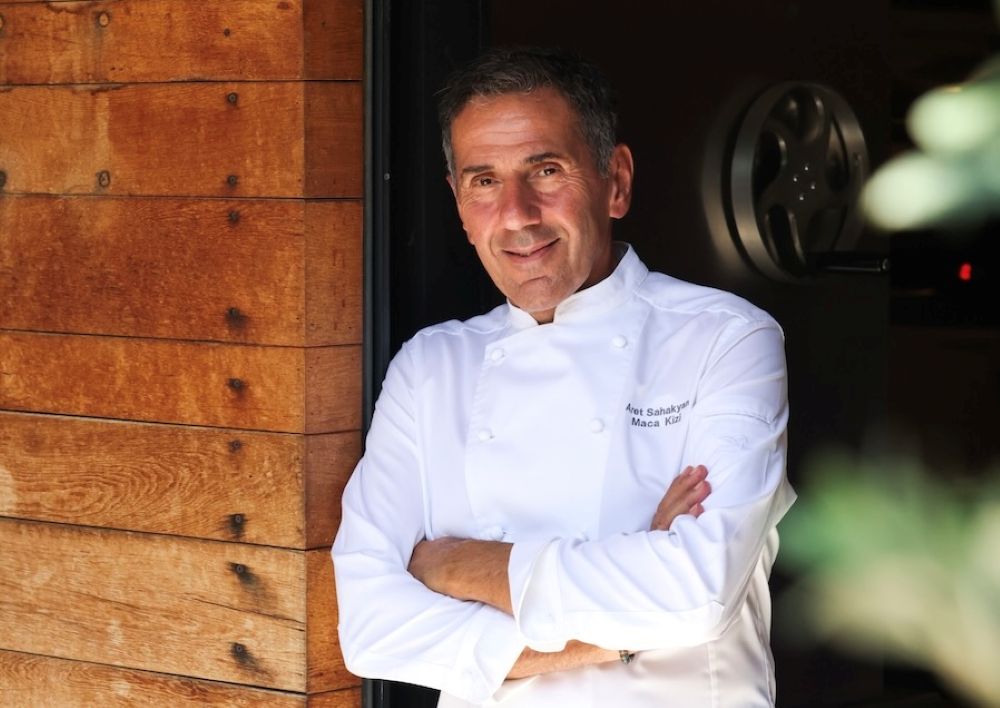
Aret Sahakyan also emerged from that American chapter, and would go on to give Maçakızı its gastronomic depth. Born in Istanbul into an Armenian family, he carried memories of a city where culinary traditions have intertwined for centuries. By the time he arrived in Washington, D.C., he already had an instinctive relationship with food, the kind first experienced deeply within the home before eventually becoming a profession. It was at Cities, where he led the kitchen, that his working relationship with Sahir truly took shape. When Sahir ushered Maçakızı into its new era, Aret followed him to Bodrum. More than 25 years in a place such as this carries considerable weight. It means thousands of days and nights in the kitchen, countless summers, teams that have grown under his guidance, chefs whose careers began at his side, guests who have returned time and again, dishes that have become signatures and an entire culinary identity that has learnt to breathe in rhythm with the hotel.
Aret is one of those chefs who shape a sense of place through their cooking. He brought to Bodrum a cuisine defined by roots, clarity and character, drawing on Turkish home cooking, his Istanbul upbringing, his Armenian heritage, the produce of the Aegean, the generous flavours of Italy and the discipline of French technique. What appealed to me most was the way his cooking, particularly in its simplest expressions, remains grounded in its surroundings. It has the composure and confidence to hold its own against a setting that is undeniably glamorous and socially charged. At Maçakızı Restaurant, the hotel’s Michelin-starred evening destination, this approach takes its most gastronomically ambitious form. Fish, seafood, vegetables, herbs, olive oil, acidity, fire, seasonal produce, small-scale producers and ingredients from the Maçakızı gardens come together in a cuisine that looks towards the Mediterranean from Bodrum’s own distinctive perspective. It is accomplished cooking, made even more compelling by the fact that it tells the story of where it comes from.
At lunchtime, Maçakızı’s celebrated buffet reveals another side of the same cuisine. It is one of Turkey’s best-known gastronomic rituals: a generous table laden with stews, vegetables, salads, pies, fish, meat, mantı and seasonal dishes, all rooted in the clean, comforting flavours of home cooking and made to be shared. This is where Ayla’s presence can still be felt. Had anyone told me that I would become so enthusiastic about a buffet, I would have thought them mad. Yet this one is in a category of its own. Who could have predicted that a Turkish take on pizza, nodding playfully towards lahmacun, would leave me completely floored? The buffet became famous across Turkey precisely because it feels like a celebration repeated every day, delivered with unwavering consistency yet retaining an almost domestic sense of grandeur.
CafeMed also plays an intriguing role in Maçakızı’s culinary story. Its name inevitably recalls the beginning of Sahir’s American chapter and the original Café Med in Georgetown. In Bodrum, however, CafeMed feels like a brighter, more coastal interpretation of that memory. Set on the beach deck, close to the water, its food is more immediate, more summery and more closely connected to the sea. I can still close my eyes and taste the octopus. CafeMed is a celebration, an expression of Aret’s cooking that leaves you wanting more. He is a true master of seafood.
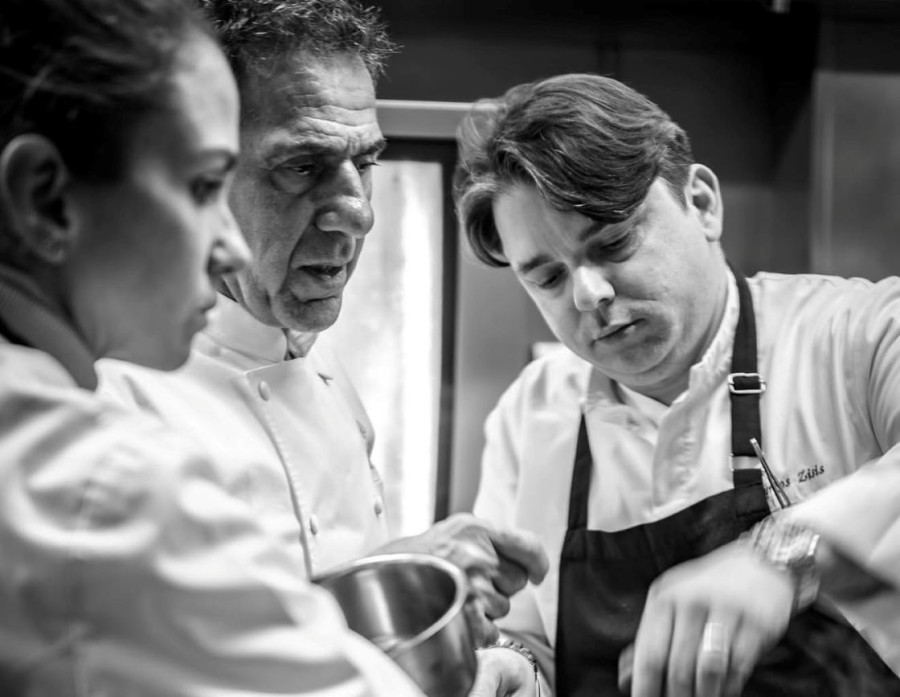
Alongside him is Greek chef Zisis Kyrkos, one of his closest collaborators. Maçakızı has always spoken the language of the sea shared by Greece and Turkey. Zisis brings his own Greek perspective, his European experience and an understanding of the Eastern Mediterranean expressed through ingredients familiar on both sides of the Aegean: olive oil, lemon, yoghurt, herbs, filo pastry, fish and vegetables.
At Ayla, this kinship finds a particularly compelling expression. It is a Greek thread woven into a Turkish story that ultimately belongs to a broader Mediterranean memory.
And so, the cuisine becomes Maçakızı’s third great chapter. Having experienced it without preconceptions, I understood why the hotel had won me over so completely. To put it plainly, this is a hotel unlike any other because its DNA cannot be replicated. Maçakızı possesses something increasingly rare: a life of its own. History, heritage, tradition, the sea, good food and charm are all laid out like cards in the same long-running game. Above all, the Queen of Spades is still present. The card that gave the legend its name continues to shape its character. The familiar and often formulaic codes of luxury can feel oddly inadequate here, because Maçakızı is judged by different standards. And perhaps that is its strongest card of all. Nearly half a century later, the game continues, and the Queen of Spades remains at the table.
- 0 - 4
- Poor
- 4.5 - 5
- Average
- 5.5
- Acceptable
- 6 - 6.5
- Good
- 7 - 7.5
- Very Good
- 8 - 8.5
- Outstanding
- 9 - 10
- Excellent
| 0 - 4 | 4.5 - 5 | 5.5 | 6 - 6.5 | 7 - 7.5 | 8 - 8.5 | 9 - 10 |
| Poor | Average | Acceptable | Good | Very Good | Outstanding | Excellent |
| *"arrow-symbol": the up arrow to the right of the rating, if it appears, symbolizes a restaurant that is close to moving up to the next ranking rung. | ||||||


Login or register to join the conversation