




Epicurus, as its name clearly suggests, draws inspiration from the philosophy of Epicurus and is located in Copenhagen’s Latin Quarter, unfolding across two levels. The restaurant occupies the ground floor, while a few steps below, the live music space begins. The separation is clear, yet the transition between the two has been carefully orchestrated so that the overall experience flows without disruption.
Behind the project is a notably strong team: Niels Lan Doky, the internationally acclaimed jazz pianist responsible for the musical programme; Lars Seier Christensen, an investor involved in restaurants such as Geranium and Alchemist; Mads Bøttger, owner of Dragsholm Castle with an established presence in the fine dining scene; and Rasmus Shepherd-Lomborg, founder of Ruby, one of Copenhagen’s most recognised cocktail bars.
The dining room is understated, with dark wood and lighting that softens as the evening progresses. Tables are well spaced, creating a calm atmosphere without ever feeling cold or formal. Music is present from the outset, at a level that allows for easy conversation without fading into the background. The playlist leans towards neo-soul and modern funk, an unexpected choice for a venue rooted in jazz, and one that signals a broader, more open-minded approach rather than a strict adherence to genre. I have to admit, I smiled when Adi Oasis came through the speakers.
I arrived shortly after 5.30pm and began with a signature gin and tonic, before leaving the choice of dishes to the chef and the wine pairing to the sommelier. As the evening progressed, the dining room gradually filled, with guests either settling in for dinner or preparing to continue downstairs.
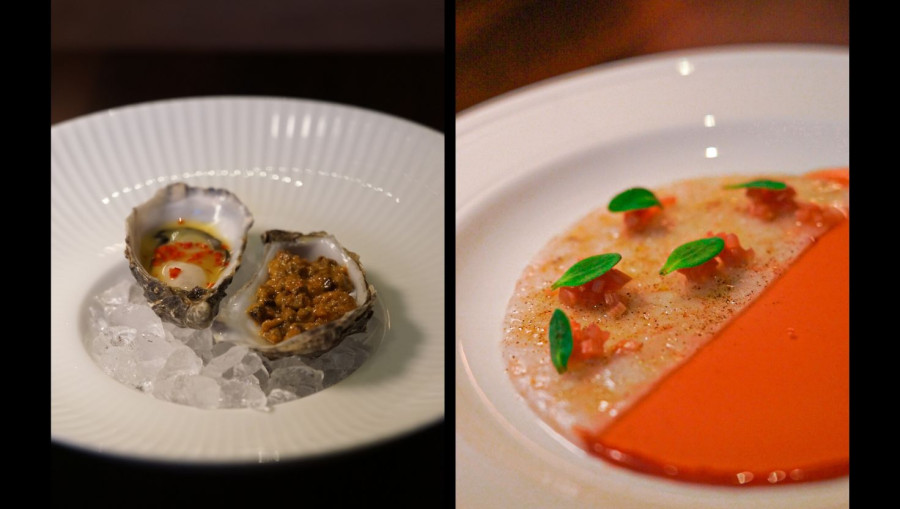
The meal opened with a series of small bites that quickly set out the kitchen’s philosophy, with a clear emphasis on the quality of the ingredients. The oysters, sourced from the shallow lagoons of western France, were among the most striking dishes of the evening. The version with calamansi and chilli was exceptionally vibrant, while the pairing with foie gras and yuzu kosho moved in a richer direction, the fat balanced by acidity and a subtle touch of heat.
A milk bread with aromatic butter was also served at the table, so good that, had I been less restrained, I might have finished it entirely without a second thought for what was to follow. The first wine of the evening was a Nussberg Grüner Veltliner 2024, notable for the fact that its vineyards are located within the city limits of Vienna.
The prawn carpaccio with rhubarb and rooibos tea was one of the most balanced dishes of the evening, and visually striking as well. The natural sweetness of the raw prawn worked beautifully with the sharpness of the rhubarb, while the rooibos added a soft, almost velvety texture that brought the elements together without overpowering them. A similar approach defined the squid dish, cut into fine ribbons in a pasta-like style, paired with charred cabbage, smoked cheese sauce and vin jaune. The pairing here was a Chardonnay Terres du Mouton 2023 from southern France.
For the main course, the chef chose to serve an off-menu dish: a beef tenderloin cooked medium rare, juicy and with excellent texture. The demi-glace, with notes of coffee and cocoa, was notably restrained, perhaps more so than the character of its ingredients might suggest, while the accompanying beetroot added an earthy balance to the dish. The pairing was a Pommard En Village 2021 from Burgundy.
Desserts were handled with equal confidence. The apple sorbet with coriander offered clean, refreshing acidity with a gentle herbal note, while the profiterole with Madagascan vanilla, bergamot and Manjari chocolate struck a fine balance between sweetness and citrus brightness. The bowl of ganache was left on the table, allowing me to return to it again and again, with quiet satisfaction.
The dinner concluded with a glass of Clos Saint Sébastien Empreintes Banyuls 2023, a fortified sweet wine that paired naturally with the final dessert while also acting as a bridge to the next stage of the experience. With glass in hand, I was then guided to my table in the lower level of Epicurus.
The live music space is more intimate, designed around the stage. A grand piano takes centre position, with tables arranged amphitheatrically in close proximity to the musicians. Small tables, low lighting and warm wood tones create an environment that draws you closer to the performance. In a prominent spot hangs a painting by Miles Davis, a detail that subtly reinforces the venue’s jazz identity.
Once seated, I was presented with a separate menu featuring light options designed to accompany the live performance. Oysters with caviar, small chocolates, olives and almonds, alongside an impressive selection of cocktails. As expected, these are not intended for a full meal, but rather to allow guests to enjoy the music without distraction. By that point, my appetite had more or less reached its limit, so I continued with wine, although the dishes arriving at neighbouring tables were undeniably tempting.
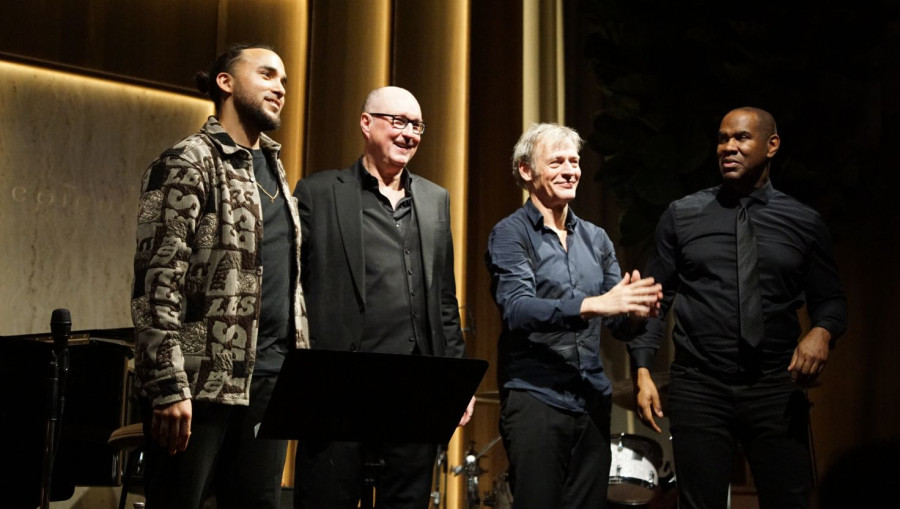
On the evening of my visit, the programme was dedicated to Prince. Taking to the stage were David Haynes, a drummer who has previously collaborated with Prince, François Moutin, widely regarded as one of the leading jazz bassists of his generation, Peter Asplund, an award-winning Swedish trumpeter, and Niels Lan Doky. A line-up of musicians with significant international credentials, who brought real depth and substance to the performance.
The band played for around an hour and a half, reinterpreting well-known Prince tracks through a jazz lens. The level of musicianship was high, and the proximity to the performers shifted the way you experience a live set, while the acoustics of the room were more than accomplished.
The audience was initially somewhat reserved, perhaps finding its footing in a space that is neither a traditional club nor a restaurant. Gradually, however, guided by the energy and encouragement of the musicians themselves, the atmosphere began to loosen.
The programme changes frequently, roughly every ten days, with different themes and guest artists. From tribute performances to appearances by artists such as Debbie Sledge, or concept-led evenings inspired by the world of James Bond, Epicurus does not rely on a fixed line-up but on a broader artistic direction, one that places jazz firmly at its core.
What is particularly compelling is that both the restaurant and the live music space stand comfortably on their own. You can come purely for the food and leave satisfied, just as you can attend solely for the performance without feeling anything is missing. When combined, however, the experience gains coherence, duration and a certain sense of occasion.
The Epicurus project could easily have slipped into the familiar format of “dinner with music”. Instead, it manages to operate with confidence on both fronts. It is a place that respects both the diner and the listener. In a city like Copenhagen, known for its ambitious gastronomic concepts, Epicurus brings something that is often overlooked: rhythm and emotion.
Info: https://epicurus.dk/Photographs: Savvas Stanis
- 0 - 4
- Poor
- 4.5 - 5
- Average
- 5.5
- Acceptable
- 6 - 6.5
- Good
- 7 - 7.5
- Very Good
- 8 - 8.5
- Outstanding
- 9 - 10
- Excellent
| 0 - 4 | 4.5 - 5 | 5.5 | 6 - 6.5 | 7 - 7.5 | 8 - 8.5 | 9 - 10 |
| Poor | Average | Acceptable | Good | Very Good | Outstanding | Excellent |
| *"arrow-symbol": the up arrow to the right of the rating, if it appears, symbolizes a restaurant that is close to moving up to the next ranking rung. | ||||||



Login or register to join the conversation