


Vacheron Constantin gives the impression of having always existed. Over the course of its 270-year history, it has firmly established itself as one of the most important and desirable watchmaking houses in the world. Throughout these centuries, Vacheron Constantin faced significant challenges, introduced key technical developments, and gradually shaped a refined and highly sought-after aesthetic that remains unmistakably its own.
Jean-Marc Vacheron was just 24 years old when he founded his workshop in Geneva, Switzerland, in 1755. In the early years, he produced a limited number of watches bearing his name, while also manufacturing components for other watchmakers, a common practice in 18th-century Geneva. A turning point came with the arrival of an apprentice whose personal details remain largely unknown. What is documented, however, is that he moved within the intellectual circles of the Enlightenment and was acquainted with figures such as Jean-Jacques Rousseau and Voltaire, two of the era’s most influential thinkers. The progressive ideas of the Enlightenment, centred on reason, precision and innovation, gradually found their way into the culture of the young manufacture.
Over time, Vacheron Constantin began to distinguish itself through technical ambition and craftsmanship. By the late 18th century, and notably around 1785, the maison was already producing complex pocket watches with complications, positioning itself among the pioneers of high watchmaking and laying the foundations for the reputation it continues to uphold today.
Between 1798 and 1813, Geneva was annexed by France as a result of the French Revolutionary and Napoleonic period. It was undoubtedly a difficult era, yet Vacheron Constantin managed to withstand the storm. In 1810, the company passed into the hands of Jacques-Barthélémi Vacheron, who began exporting watches to France and Italy, securing an early international presence.
His vision for watchmaking and his insistence on outward expansion also encouraged a flourishing of complicated timepieces, including repeating mechanisms and calendar watches. However, Jacques-Barthélémi Vacheron’s most significant achievement was the arrival of François Constantin. Their collaboration began with an impressive letter sent by Constantin, whose closing line would later become the company’s enduring motto: “Do better if possible, and that is always possible.”
François Constantin quickly became an integral part of the company, and his surname was soon added to its name, giving rise to Vacheron Constantin. A charismatic and gifted salesman, he rapidly established himself as a favoured watchmaker among the European aristocracy and royal families. Naturally, he also had in his hands a product of exceptional quality, one that consistently adhered to a distinctly luxurious standard.
Constantin was instrumental in establishing the company’s presence in the United States, where the rapidly expanding class of wealthy landowners was added to the clientele of Vacheron & Constantin, further reinforcing its international stature.
In 1839, Vacheron Constantin made another decisive addition to its ranks with the appointment of Georges-Auguste Leschot as Technical Director. His contribution to the manufacturing process proved transformative. Leschot’s invention of the pantograph, a device that allowed the precise and repeatable production of movement components to identical dimensions, fundamentally changed the course of watchmaking. For the first time, parts could be standardised with true reliability. This development marked a shift away from entirely unique, individually hand-made mechanisms towards a system of production far closer to the one we recognise today.
The second half of the 19th century was the period in which the artistic and mechanical mastery of Vacheron Constantin shone at its brightest. Vacheron & Constantin timepieces won awards in chronometry trials at major observatories, while in 1880 the Maltese Cross was adopted as the Maison’s official emblem, inspired by its resemblance to a component of the barrel mechanism used to regulate the unwinding of the mainspring. One of the company’s watches was even incorporated into the Fabergé Third Imperial Egg in 1887, a testament to the esteem in which the brand was held by Europe’s highest circles.
Enamel cases with luminous detailing, relief dials and hand-crafted decoration, highly precise movements with rich complications, and elegant ladies’ watches featuring sculptural bracelets defined the Vacheron & Constantin signature of the era. This steady ascent culminated in the opening of the company’s first boutique in Geneva on 1 August 1906. While the House continued to receive commissions from the ruling elite around the world, it was now entering a new reality: one in which any individual could acquire a Vacheron & Constantin timepiece, provided they possessed the means to do so.
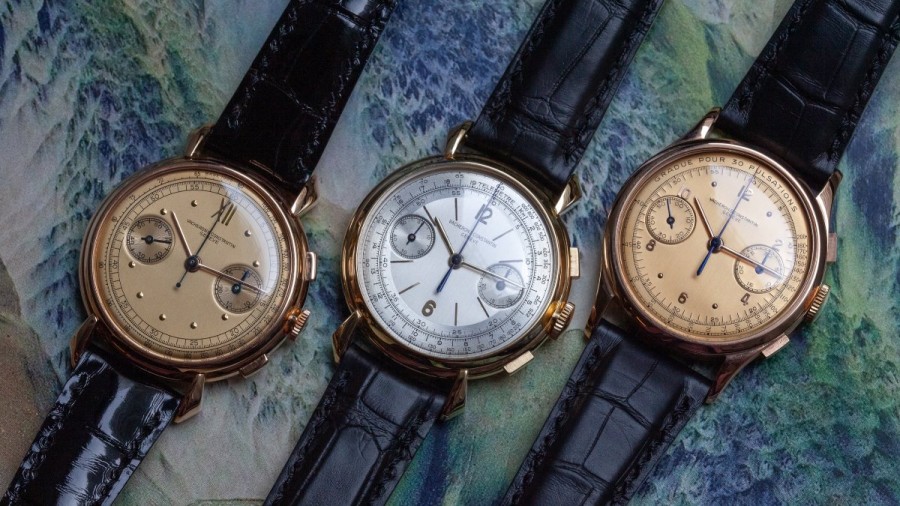
Vacheron Constantin had already produced a small number of wristwatches throughout the 19th century, but it was the 20th century that truly marked the rise of the wristwatch. In 1921, the Maison introduced its first “driving watch”, featuring an angled dial designed for easy legibility without the need to rotate the wrist. This distinctive design was later revived in 2008 as the Vacheron Constantin Historiques American 1921.
Equally emblematic of the brand’s uncompromising standards was the pocket watch created in 1929 for Fuad I of Egypt. A masterpiece of technical refinement and aesthetic balance, it stands as a powerful illustration of the level of craftsmanship and ambition that defined Vacheron & Constantin’s production during this period.
Vacheron Constantin had already produced a small number of wristwatches throughout the 19th century, but it was the 20th century that truly marked the rise of the wristwatch. In 1921, the Maison introduced its first “driving watch”, featuring an angled dial designed for easy legibility without the need to rotate the wrist. This distinctive design was later revived in 2008 as the Vacheron Constantin Historiques American 1921.
Equally emblematic of the brand’s uncompromising standards was the pocket watch created in 1929 for Fuad I of Egypt. A masterpiece of technical refinement and aesthetic balance, it stands as a powerful illustration of the level of craftsmanship and ambition that defined Vacheron & Constantin’s production during this period.
In 1970, under the leadership of Jacques Ketterer, the company officially adopted the name Vacheron Constantin, dropping the “&” that had accompanied it for more than a century. Around the same time, the Maltese Cross began to appear on the dials themselves, further strengthening the brand’s visual identity and recognition.
Like most Swiss haute horlogerie maisons during the turbulent 1970s, Vacheron Constantin was forced to adapt in order to remain viable in a rapidly changing luxury landscape. Creativity, however, did not falter. In 1972, an audacious asymmetric, curved case that required an oval movement was awarded the Diplôme du Prestige de la France, proving that even as sales slowed, the Maison’s inventive spirit was very much alive. Yet on the horizon, a watch was about to redefine the industry.
Most watch enthusiasts are familiar with the story of the Audemars Piguet Royal Oak, unveiled in 1972 and designed by Gérald Genta. Its launch sent shockwaves through the industry by introducing a steel sports watch priced as a luxury object. Vacheron Constantin did not respond immediately. When it did, however, the result was well worth the wait.
In 1977, to mark the brand’s 222nd anniversary, the Maison presented the Vacheron Constantin 222. A sports watch with an integrated bracelet, it immediately stood apart thanks to its distinctive hexagonal bracelet links and gear-like bezel, elements that clearly differentiated it from the Royal Oak and from the wave of Gérald Genta–inspired designs that followed. It is worth noting that the watch’s designer, Jörg Hysek, was just 23 years old at the time, a remarkable fact that only adds to the legend of the model.
In 1987, following the death of Jacques Ketterer and in the absence of heirs to take over the business, the company was acquired by Ahmed Zaki Yamani, the former Minister of Petroleum and Mineral Resources of Saudi Arabia, marking the beginning of a new chapter in the long and complex history of Vacheron Constantin.
In 1996, Vacheron Constantin was fully acquired by the luxury goods group Richemont, a move that marked the beginning of a carefully managed renaissance for the Maison. One of the first major statements of this new era was the launch of the Overseas collection, which reinterpreted the spirit of the 222 in a bolder, more muscular and unmistakably contemporary form. At the same time, watches such as the Lady Kalla ensured that Vacheron Constantin retained its strong presence in the world of high jewellery watchmaking.
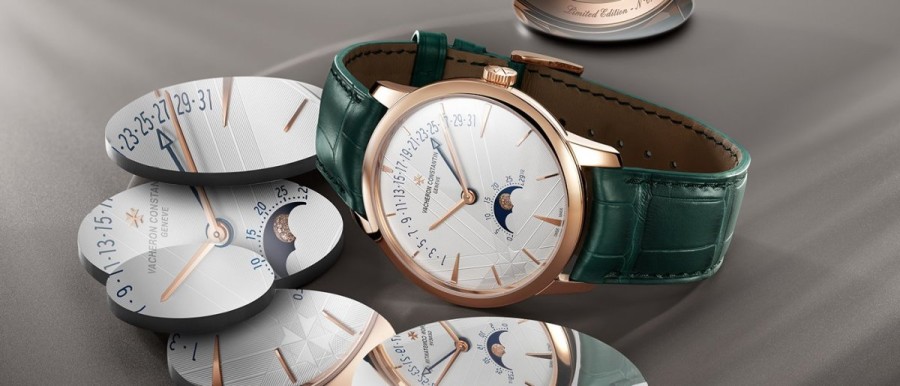
In 2004, the Maison introduced the Patrimony collection, distilling the classical restraint and purity that defined Vacheron Constantin’s watches of the late 1950s and 1960s. That same year also saw the opening of the manufacture in Plan-les-Ouates, a purpose-built facility whose architecture was conceived to echo the shape of the Maltese Cross, the brand’s enduring emblem.
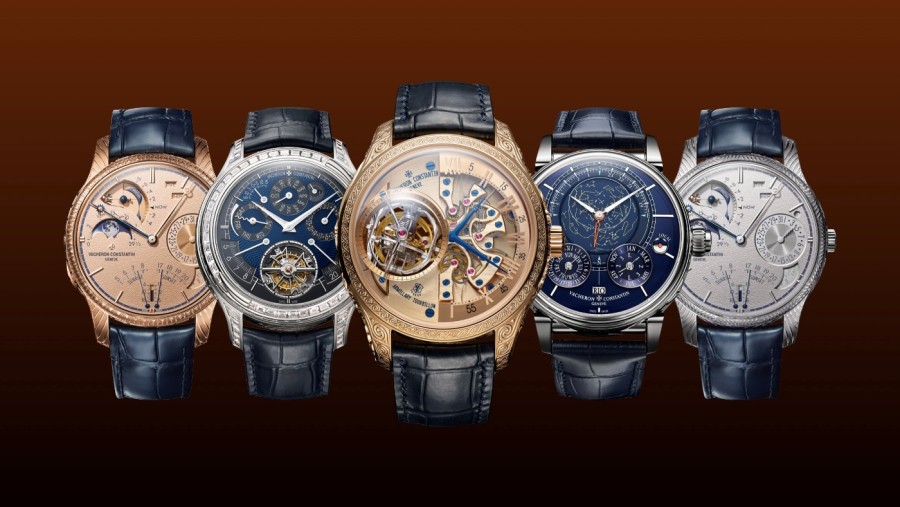
Today, Vacheron Constantin maintains a rare equilibrium between contemporary design language and deep respect for its heritage. It is elegance, precisely defined. A watch such as the Overseas (ref. 5520V/210R-B966) with its striking green dial is undeniably modern, yet it is crafted with the same care and discipline one would expect if it were destined for a nineteenth-century monarch. At the other end of the spectrum stand creations like the Les Cabinotiers Berkley Grand Complication, unveiled in 2024. With 63 complications, it is the most complicated mechanical watch ever made, a clear demonstration that the Maison has lost none of its inventive spirit or technical ambition.
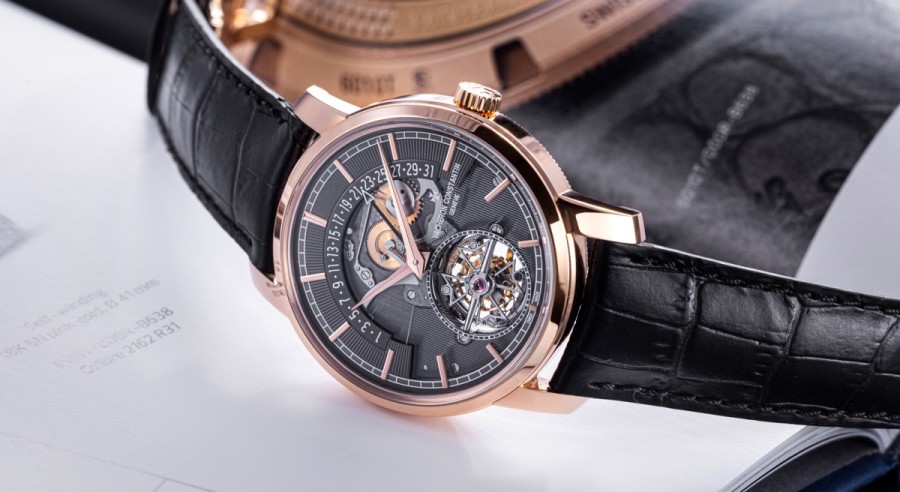
Over the course of its 270-year history, Vacheron Constantin has achieved something few brands ever manage: it has remained profoundly desirable. For some devoted collectors, owning a Vacheron Constantin is a lifelong aspiration. For others, it may be simply another stop while browsing luxury boutiques. Whether one is saving patiently for a simple Patrimony, able to acquire a Traditionnelle tourbillon, wealthy enough to commission a bespoke Les Cabinotiers creation, or looking to gift an Heure Romantique, one thing is certain: they are in safe hands. Vacheron Constantin represents the summit of watchmaking through its long tradition and its unwavering commitment to quality. And if you ever happen to inherit one from an aunt or uncle, whatever you do, do not say, “It’s not really my thing.” Trust me. That would be a sin.



Login or register to join the conversation