



Last week, Tohru in der Schreiberei was awarded its third Michelin star. While this achievement may have come as a surprise to those not closely following Nakamura’s journey, for those who know him well, it was a natural and well-earned milestone. The restaurant is situated in the historic Schreiberei, the oldest building in Munich’s city centre. Once a print shop and workshop, this space stands as a living testament to the city’s industrial past. The name “Schreiberei” means “office” or “print shop” in German, and the building itself serves as a true tribute to Munich’s rich industrial heritage.
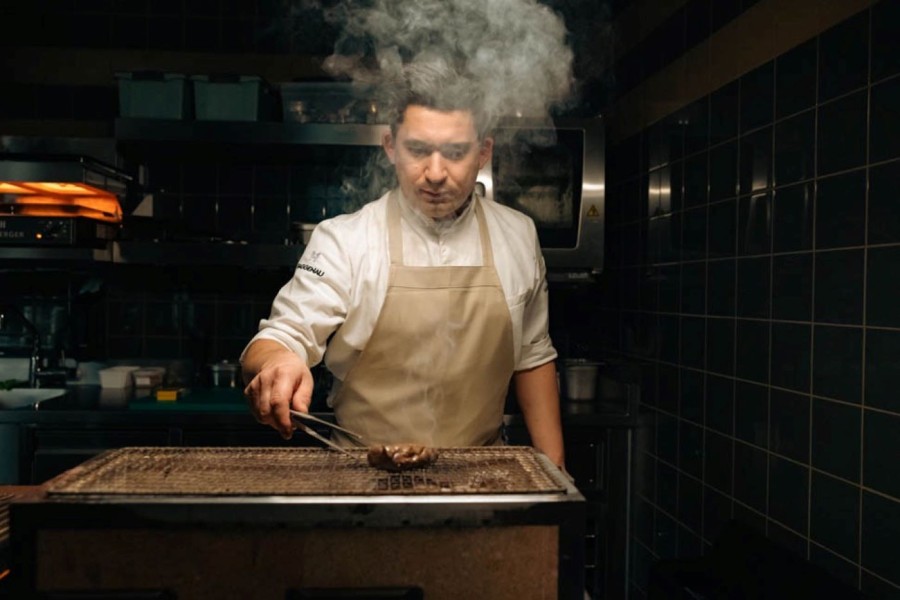
As you ascend the stairs, the vibrant energy of the space immediately becomes apparent. The door swings open, and passing through the corridor, an impressive yet welcoming open kitchen comes into view. Flames flicker in the large fire pit, pots simmer gently — the atmosphere is warm and inviting. Guests often begin their experience here, with staff introducing the chefs, and eventually, Tohru himself greets visitors in person. From this point, you`re led to your table, and everything flows seamlessly — like clear, flowing water. Under the expert direction of Alexander Will, the service operates with absolute professionalism: perfectly coordinated, swift, yet warm and personable, never cold or impersonal. For wine lovers, Tohru’s sommelier, Christian Rainer, offers an impressive selection of over 1,500 bottles, including around 500 varieties of sake. I sampled a few during the meal and immediately wished I had chosen the sake pairing — next time, I’ll be sure to indulge.
Born in Munich in 1983 to a Japanese father and a German mother, Tohru Nakamura grew up straddling two cultures, two ways of thinking, and two culinary philosophies. His Japanese background instilled a meticulous approach, precision, and a deep respect for high-quality ingredients. Meanwhile, his European influences—particularly the structure and discipline of the German school of cooking, which has been heavily influenced by French cuisine—rounded out his approach. But Nakamura’s cuisine is not merely a patchwork of influences or an elaborate “fusion.” Instead, he has absorbed the core elements of both worlds and transformed them into a personal culinary language — discreet yet powerful, disciplined without ever feeling cold, precise yet full of life. Through each dish, Nakamura masterfully captures this balance — between tradition and innovation, simplicity and detail, calm and intensity. Technique here is never about showmanship; it’s a tool used to reveal the true essence of the main ingredients.
Nakamura’s journey has been shaped by top-tier experiences across Europe and Japan. He began with an internship under Léa Linster in Luxembourg, where he nurtured his passion for cooking. He then trained at the three-Michelin-starred Vendôme in Cologne, under Jochen Wissler. His career continued working with Sergio Herman at Oud Sluis, deepening his knowledge of Japanese cuisine at Sushi Ito and Kagurazaka Ishikawa. As head chef at Werneckhof, he earned two Michelin stars, confirming his position in the world of fine dining. In 2021, at Schreiberei, he managed to secure two stars in a matter of months — just after opening the restaurant. We’re talking about a sprint, not a jog!
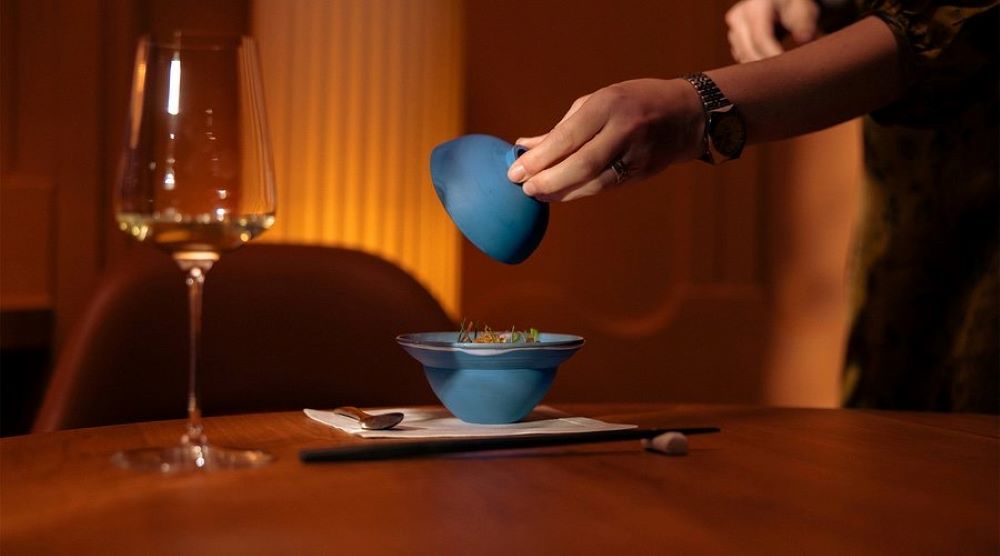
I’ll briefly highlight a few dishes — though overall, the level of quality across the menu is truly exceptional. An incredible oyster is quickly grilled over open flame, subtly infusing smoky notes while the earthiness of buckwheat brings harmony and depth. Another standout was the nori tempura with wagyu, eel, and habanero pepper: the contrasting textures are astonishing — the crisp nori wraps around the delicate wagyu and velvety eel, while the mild heat of the habanero delivers a lively, refreshing burst that adds complexity to the dish. A piece of silky baleaga tuna rests on airy rice, complemented by an elegant beurre blanc-style sauce, perfectly balancing richness and finesse. The cod with morels and pine aromatics is a veritable feast for the senses — a bold, carefully crafted dish that beautifully bridges land and sea. The cod, prepared with meticulous skill, remains fresh and delicate, while the morels lend a deep, earthy warmth that perfectly offsets and enhances the fish. The meal concludes with a tribute to Japanese pastry art: Okashi, a series of small confections paying homage to Japan’s traditional sweet-making techniques. These delights are refreshed through a contemporary artistic approach, celebrating both heritage and innovation. With a menu priced at €320, I believe it offers extraordinary value — every cent well spent.
The awarding of the third star came at precisely the right moment. Why? Because Tohru Nakamura’s work has reached such a high level that it’s impossible to ignore. I truly enjoyed this restaurant because it offers everything — but in a completely unique way that is entirely its own. I was captivated and would return without hesitation. Simply outstanding. Well done to the team!
Score: 9.5 / 10
- 0 - 4
- Poor
- 4.5 - 5
- Average
- 5.5
- Acceptable
- 6 - 6.5
- Good
- 7 - 7.5
- Very Good
- 8 - 8.5
- Outstanding
- 9 - 10
- Excellent
| 0 - 4 | 4.5 - 5 | 5.5 | 6 - 6.5 | 7 - 7.5 | 8 - 8.5 | 9 - 10 |
| Poor | Average | Acceptable | Good | Very Good | Outstanding | Excellent |
| *"arrow-symbol": the up arrow to the right of the rating, if it appears, symbolizes a restaurant that is close to moving up to the next ranking rung. | ||||||



Login or register to join the conversation