


In this Story of Perfection, however, we will delve into the life of a fashion legend: the "emperor" Valentino Garavani, who will be turning 93 years old in a few days, having been born on May 11, 1932.
Valentino was born in northern Italy, in Voghera, a small town in the province of Pavia. His mother named him Valentino because she admired Rodolfo Valentino. His parents had no connections to tailoring or the textile industry. However, his aunt Rosa was a renowned seamstress in the town, and it was she who instilled in him a love for fashion. By the mid-1950s, Italy was not yet on the fashion map; fashion was confined to a select few members of the Italian aristocracy. Everything revolved around France and Paris. Thus, at the age of seventeen, Valentino left for Paris to study at the École des Beaux-Arts and the Chambre Syndicale de la Couture Parisienne.
Alongside his studies, he apprenticed for a brief period under Jacques Fath, who was one of the fashion stars of the era, alongside Chanel, Christian Dior, Pierre Balmain, and Jean Dessès. Having made a brief stop at Balenciaga’s atelier, Valentino Garavani had the opportunity to work alongside the Egyptian-born Greek designer Jean Dessès, learning all the essential secrets of haute couture. In the early 1950s, Jean Dessès was the favourite of the aristocracy across the globe. However, this strong five-year partnership ended abruptly in 1957, and Valentino found refuge at his friend Guy Laroche.
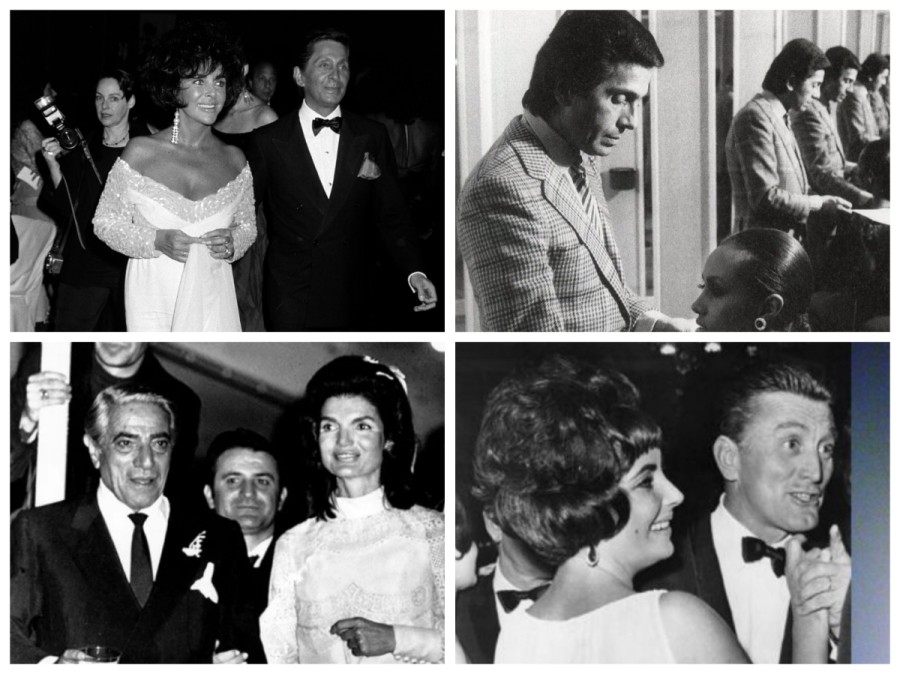
In 1959, realising that his career could not progress in Paris, he decided to return to Italy and opened his own atelier in Rome (Via Condotti 11) in 1960, with financial assistance from his father. This investment was of the highest risk, considering that Rome had no reputation for haute couture, and Valentino himself has stated that he had no idea how to manage such a business. “Sometimes ignorance is a wonderful gift,” Valentino often says. However, in the early 1960s, the whole world was captivated by the Dolce Vita of Federico Fellini and Italian cinema in general. Gradually, the mere mention of Rome brings to mind Fellini, Antonioni, Marcello Mastroianni, Sophia Loren, and Valentino! His obsession with perfection, passion for high aesthetic standards, charisma, and ability to forge strong friendships with the era`s jet set propelled him to success. He dressed Monica Vitti and Elizabeth Taylor, among others. After Taylor’s appearance at the gala for the launch of the film Spartacus, in the white dress he designed for her, Valentino never looked back. In 1963, he decided to photograph his collection on the set of Fellini’s 8½. His collaborations with stars from Italian cinema and beyond brought him significant global publicity. Unlike Chanel, who snubbed celebrities, Valentino cherished friendships with them and their lifestyle. His friendship with Jacqueline Kennedy allowed him to design the famous wedding gown for her marriage to Onassis in 1968. His success was further bolstered by his partnership with Giancarlo Giammetti, whom he met in 1960 and who brought exceptional business acumen to their collaboration.
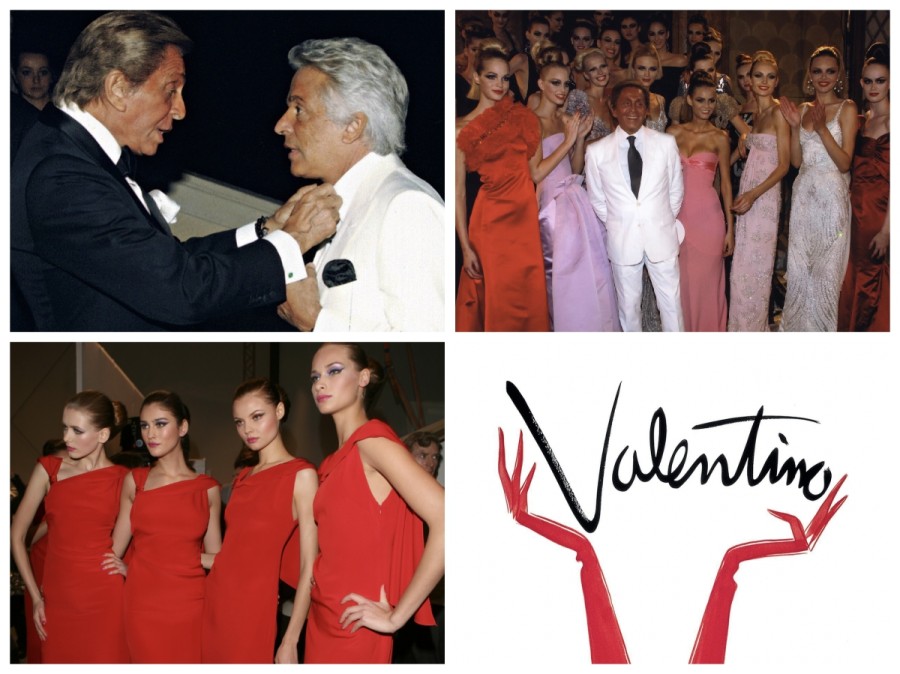
Throughout the late 1960s, while all fashion magazines in Europe and America were looking to France for haute couture, Valentino`s collections—with their elegant aesthetics and captivating elements that enchanted the women of the era—established his brand worldwide. His collections were not sexy, but elegant. By raising the waistline slightly higher than usual in his designs, he created the illusion of longer legs, adding a touch of class to his creations. He never intended to demystify haute couture as Yves Saint Laurent did in the seventies. Instead, he consistently sought to highlight Italian culture and aesthetics within haute couture.
Every designer aims to have a trademark, and for Valentino, that is the colour red—the one that carries a hint of orange. It is bright, warm, and imposing, a red that captivates everyone. He discovered it during a trip to Barcelona. Since then, there has always been a red dress in his collections.
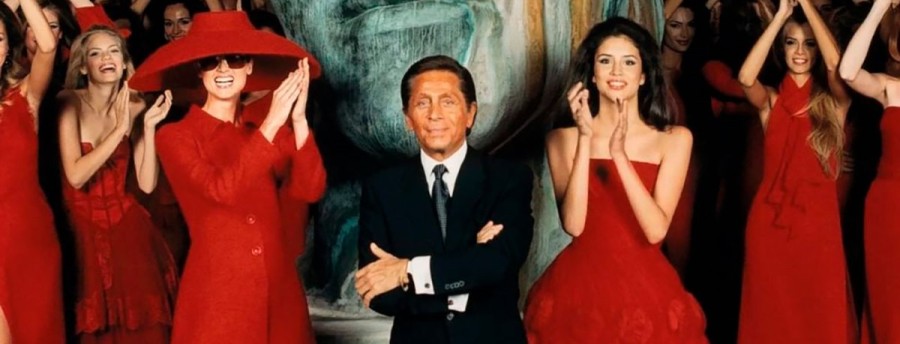
In 1969, he opened two prêt-à-porter boutiques: one in Rome and another in Milan. He launched his first fragrance. In 1970, he opened a prêt-à-porter boutique in New York, where he spent a considerable amount of time forging friendships with some of America`s most famous and influential people. Upon arriving in New York, he immediately realised it was destined to be the "ultimate city" of the 1970s—and he conquered it. By the early 1980s, he had dressed everyone, not only individuals but even the Ford Lincoln Continental model in America from 1983 to 1985! Not only did he gain immense fame, but he also amassed significant wealth. In his impressive palazzi in Rome and Paris, everyone is welcomed. He doesn’t just associate with jet setters—he is one of them.
Haute Couture, prêt-à-porter, perfumes, accessories… all are achieving phenomenal sales. This is because he possesses the astuteness to uphold the core principles of haute couture across everything. Simplicity and the everyday do not exist in his mindset; everything must be of high quality and, above all, possess unparalleled aesthetics.
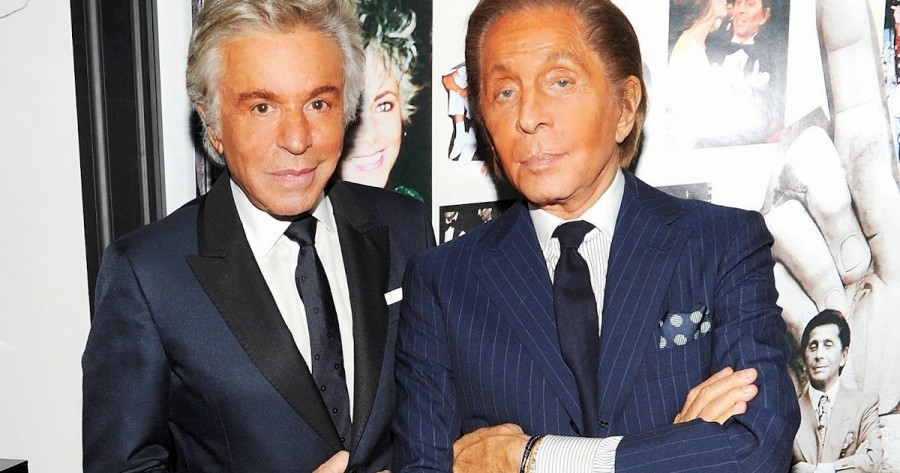
In 1998, he decided, along with his lifelong partner Giancarlo Giammetti, to sell his company for $300 million. Not because they were facing financial difficulties, but to secure the future of the Valentino name. He remained at the helm of the company until 2007. Having turned 75 and with nearly 50 years of leadership at Valentino, he "retired" in 2007. His influence in the fashion industry over the years has been profound, and his empire is legendary.
In Maria Grazia Chiuri and Pierpaolo Piccioli, he found worthy successors—two individuals who have maintained the unmistakable identity of the Valentino house: high quality, elegant aesthetics, and hundreds of hours of handmade craftsmanship for each garment in every collection. In April 2024, they were succeeded by Alessandro Michele. Valentino will not only be remembered for his innovations in the fashion sector but will go down in history as the "emperor" of absolute chic style and grand lifestyle.



Login or register to join the conversation