



If you run a quick Google search, you’ll find that Switzerland and Italy both claim the title of Europe’s highest vineyard, each proudly pointing to tiny plots at around 1,300 metres above sea level. But all it takes is a short drive into the mountainous heart of Limassol to realise: at that altitude, Cyprus is just getting started.
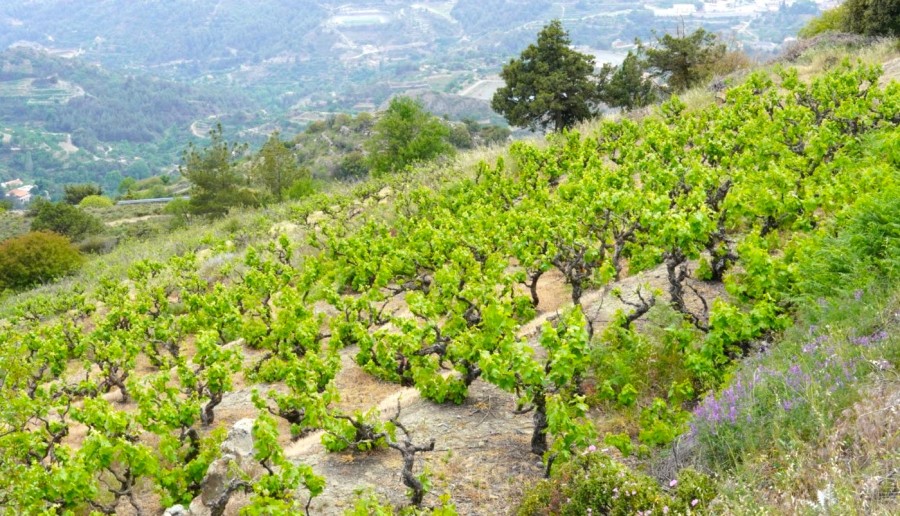
This extreme — by European standards — elevation is only part of the island’s remarkable viticultural story. Free from the scourge of phylloxera, Cyprus is home to countless ancient, ungrafted vines that have stood the test of time. In the face of heat and chronic drought, these old bush-trained vines are traditionally shaped into sculptural goblet forms — a striking sight, and a practical adaptation.
In a world where the holy trinity of high altitude, ungrafted vines and bush-trained viticulture is the hottest trend in wine, Cyprus doesn’t just tick the boxes — it offers the full package, turned up to eleven. It was this very package I immersed myself in, joined by my friend and fellow traveller Nikos Ioannidis, with the expert guidance and warm company of Elias Makridis of WINECORE — a consortium of 17 of the island’s top producers, united in their mission to champion Cyprus’s wine heritage and native grape varieties.
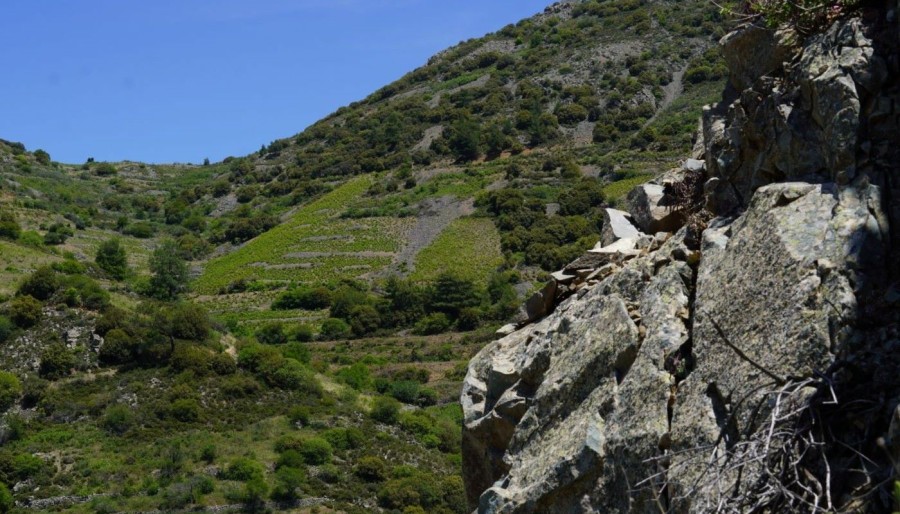
Our first stop: the village of Farmakas, perched midway between Nicosia and Limassol. It’s here that the determined Daniil Anastasi returned after a highly successful career in South Africa, driven by a vision to revitalise his ancestral village and firmly place it on Cyprus’s wine map. He also gave us the opportunity to admire ancient vineyards of the pale-skinned, low-pigment local grape variety, Mavro Ambelissimo, thriving at altitudes reaching up to 1,350 metres.
The terroir of this region is widely regarded as the finest for this particular variety — a fact acknowledged by fellow producers and confirmed by anyone who’s sampled the competition. The entire operation at Santa Irene winery reflects a distinctly rustic character, further elevated by Daniil’s extensive use of beautifully weathered, traditional clay amphorae — many of which he has lovingly salvaged from homes and storerooms throughout the village.
The tank-fermented Laxia 2023 (7/10) offers a gentle introduction to the pale, caramel-toned character of the variety — a wine that remains surprisingly light and almost watery in mouthfeel, even at 15% ABV. In contrast, the amphora-aged Aepys 2021 (8/10) pushes the grape to its upper limits, revealing a Grenache-like profile built on red fruit, supple tannins, and a calm, extended finish. Meanwhile, Aeoneo 2021 (8/10) takes the southern French reference point even further — delivering more blood, more spice, and the generous body that comes with a full 16% alcohol.
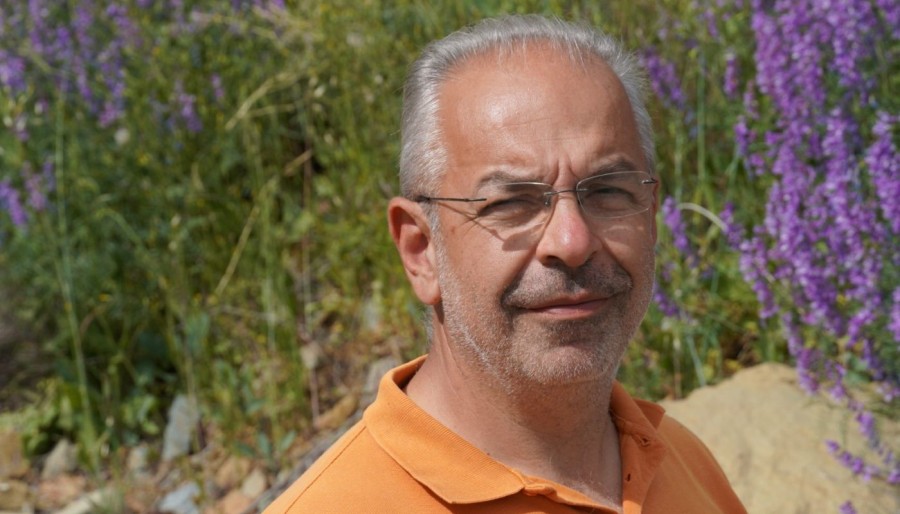
If you`re looking to explore the full potential of Cyprus’s flagship grape variety, head westward to the celebrated wine villages of Pitsilia. Situated at 1,200 metres above sea level, Kyperounda Winery cultivates some vineyards that climb as high as 1,500 metres (see photo below), making its claim to be the highest winery in Europe — and one of the highest in the world — entirely credible. Established in 1998 as a private cooperative and later strengthened by the involvement of the Photos Photiades Group, the winery has flourished under the expert guidance of renowned oenologist Minas Minas (pictured above), delivering countless moments of brilliance in the glass.
The vineyards here are carved into lynchets — traditional, stone-supported terraces that hug the dramatic slopes above the winery. These steeply tiered plots evoke the vertiginous beauty of the Côte-Rôtie (albeit without the river), offering a striking glimpse of viticulture in one of its most rugged and heroic forms. The winery’s work with international varieties — particularly Chardonnay and Cabernet Sauvignon — reaches its peak expression in the aptly named Epos series: wines that are nothing short of epic.
However, the winery’s most emblematic wine is Petritis, the basic Xynisteri crafted from grapes sourced across several vineyards in the area. Don’t be discouraged by the word “basic” or its modest price — Petritis is a white wine of almost world-class calibre, with remarkable ageing potential. The banana and lemon notes of the 2024 vintage (8/10) suggest that it will benefit from time, while the dense and explosively aromatic pineapple-driven 2018 (8.5/10) confirms this. At 12 years old, the 2013 (9/10) delivers a striking petrol-mineral intensity and is only just beginning to develop nutty, tertiary characteristics. The 2010 (9/10) recalls a top-quality German Riesling, proving that vintages like ’13 are no coincidence.
The accomplished winemaker relies on the expressive qualities of the grape and the high-altitude vineyards at 1,200 metres, carefully exploring the role of vineyard aspect as a crucial element of the terroir. This approach allows us to enjoy Anatoli 2020 (8.5/10), the more tropical and generous expression, alongside Dysi (8.5/10), which is more citrus-driven and precise.
Kyperounda rises to the occasion even when things start to… darken! Akti 2024 (8.5/10) — a softly coloured blend of Lefkada (Vertzami) and Mavro — stands as the best rosé in Cyprus, while Alma Maratheftiko 2023 (8/10) rewards the effort required by this notoriously challenging red variety, offering rich floral and cherry aromas, vibrant acidity, yet without the relentless tannins it’s known for.
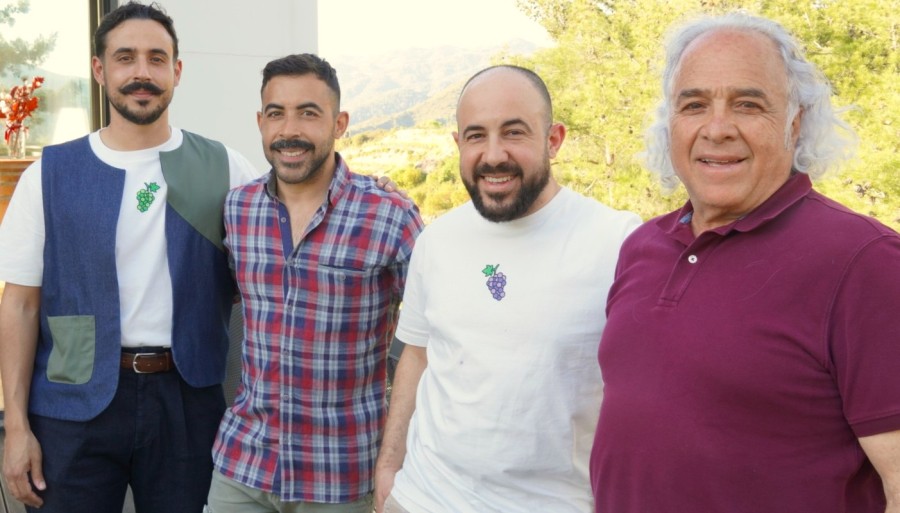
Tsiakkas Winery is the other high-altitude… specialist (featured in the header photo), situated just south of Palendri village. Founded in 1988 by Kostas and Marina Tsiakkas, it has evolved into a dynamic enterprise with the next generation already playing a key role. Its 220 hectares reach altitudes of up to 1,450 metres and, although primarily planted in linear rows, the vineyards are equally impressive.
Xynisteri is a cornerstone variety for Tsiakkas, and the eponymous label was one of the winery’s first. The 2024 vintage (8.5/10) is a full-bodied, relatively soft and fruit-forward expression of the grape, while the 2020 (8/10) is at its peak — showing notes of dried fruit, soft texture, and a rich profile of yellow fruit and subtle tobacco. For those seeking more drama in their glass, the Pitsilia 2023 (8.5/10) — a single-vineyard bottling — offers just that. The cuvée from this namesake plot is partially vinified in old Commandaria barrels, lending a honeyed dimension, impressive volume, and beautifully integrated acidity.
Undoubtedly one of the most talked-about grape varieties on the island in recent years is Promara. I often refer to it as “Cyprus’s answer to Vidiano,” and Tsiakkas’ interpretation only reinforces the comparison. The 2023 Promara (8/10), partially barrel-aged (20%), is rounded and textural, with aromas of yellow stone fruits and angelica, delivering a supple, lightly oily palate.
The estate’s reds hold their own, with several compelling single-vineyard bottlings. Mouklos 2024 (8/10), sourced from an 8-stremma* plot planted with Mavro Ambelisimo, shows no trace of overt oak influence. Instead, its soft, caramelly, black-cherry fruit is complemented by a lovely streak of minerality that makes it quite addictive. By contrast, Vamvakada 2022 (7.5/10) is a textbook example of Maratheftiko: herbal, floral, and packed with dark red and black fruit. It comes with plenty of acidity and tannin, tipping the balance toward aggression for now—but it`s clearly built for ageing over the next 5–10 years.
The next big thing in Cypriot wine is undoubtedly Yiannoudi — a red grape of remarkable elegance and finesse. The Palendri producer proves his calibre with the Yiannoudin 2021 (8.5/10), a peppery, floral wine with a medium body, refined tannins, and an impressively long finish. And after something so on-trend, what better way to close than with a timeless classic? The Commandaria 2020 (9/10), sourced from vineyards around Agios Mamas, is a 100% Xynisteri. Naturally sun-dried, it boasts 172g/L of residual sugar and a beautifully balanced acidity, calling to mind a top-tier, youthful Vinsanto.
*Note: “stremma” is a Greek unit of land measure, equal to 1,000 square metres.
*Photos: Nikos Ioannidis


Login or register to join the conversation